Important Cultural Property

Box with Chrysanthemum Flower Design in Makie
菊蒔絵手箱
Lacquerware · Nanbokuchō, 14th centuryKyushu NM
Home › Browse › Lacquerware › Kamakura period › Sutra box depicting peacocks in gold inlay
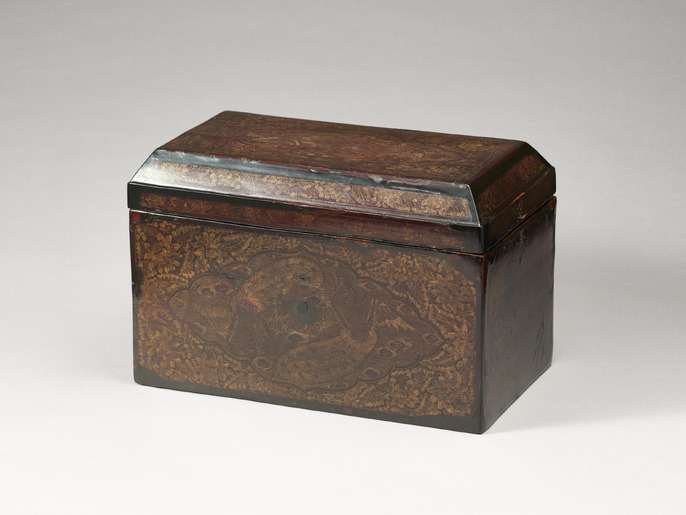
Artisans in Hangzhou, a town in China’s Zhejiang Province, produced this box in 1315. It once held Buddhist scriptures, such as an edition of the Tripitaka written during the Yuan dynasty (1279–1368). There are 3 similar objects from the same period (all Important Cultural Properties) that have been passed down in locations such as Seigan-ji Temple in Fukuoka. This box is decorated with a Chinese gold inlay technique known as qiangjin. Japanese artisans learned this technique from their Chinese counterparts and developed it further into chinkin, which became popular for decorating lacquerware in the Muromachi period (1392–1573). That makes this object an important part of the history of exchange between medieval Japan and China.
— Museum description: Kyushu National Museum (CC BY 4.0), via ColBase / Japan Search.


