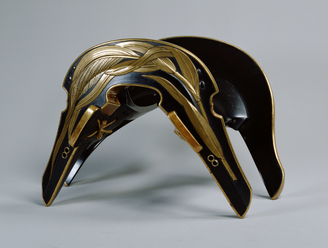
Important Cultural Property

Box with Chrysanthemum Flower Design in Makie
菊蒔絵手箱
Lacquerware · Nanbokuchō, 14th centuryKyushu NM
Home › Browse › Lacquerware › Azuchi-Momoyama period › Portable shrine depicting birds and flowers in maki-e lacquer

Lacquerware objects like this one were created in early modern Japan (1568–1867), then exported to western Europe for use in Christian religious rituals. The structure of this shrine, shaped like a double-door cabinet, follows specifications laid out by the European Jesuit missionary who had commissioned it. However, the techniques used to decorate it, such as inlaying mother-of-pearl and sprinkling gold powder on wet lacquer (maki-e), are distinctively Japanese. This combination makes its overall design a unique blend of Japanese and Western elements, symbolizing the cultural exchange that took place between early modern Japan and western Europe. Housing a portrait of the Holy Family painted in Europe, this work represents the pinnacle of Western-style lacquerware made in Japan.
— Museum description: Kyushu National Museum (CC BY 4.0), via ColBase / Japan Search.