National Treasure

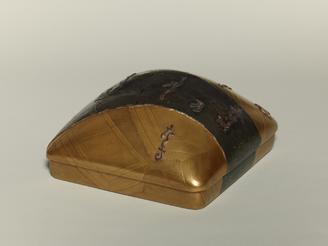
Box for Personal Items with a Design of Carriage Wheels in Water
片輪車螺鈿手箱
Lacquerware · Kamakura, 13th centuryTNM
Home › Browse › Lacquerware › Kamakura period › Seat for Buddhist Ceremonies (Raiban) with Gentian Flowers in Circles

A raiban is a square platform for a Buddhist monk to sit on. The word ‘rai‘ refers to religious ceremonies, while ‘ban‘ is a type of flat plate. During ceremonies, the officiating monk sits on the raiban facing the Buddhist image. A small tatami mat is usually placed on top of the platform, with desks positioned in front and to the right and left to hold Buddhist implements and sutras. From extant examples and records, we know raiban were commonly used in Japan in ancient times. The oldest extant example was made in the latter half of the 12th century. Raiban are still often used at Buddhist temples today. They can broadly be divided into two types: those with simple box shapes and those with curved legs resembling cat’s feet. This is an example of the latter and it is thought to be the oldest example of this type. It is made of wood coated in black lacquer.
The surface and the sides of the platform are decorated with gentian flowers created by sprinkling tin powder onto lacquer. Gilt bronze fittings are also placed in several places, adding to the rich ornamentation. In Japan, gold or silver powder is typically sprinkled onto lacquer, and the use of tin powder is quite unusual. However, ancient records often refer to tin powder in lacquerware designs, so it may have been more common in the past. The unusual decoration makes the platform stand out compared to other surviving examples. A [raiban] is a low seat from which a Buddhist monk conducts sermons or ceremonies. This example is made of lacquered wood with metal fittings and four “cat’s paw” legs. The floral emblems on the surface are rendered in powdered tin, a material rarely used in Japanese lacquerware.
— Museum description: Tokyo National Museum (CC BY 4.0), via ColBase / Japan Search.