National Treasure
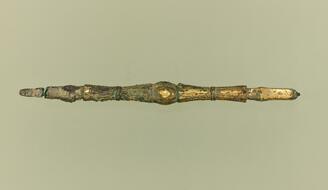
Shiketsu (Posts Erested at Four Corners of Alter to Rope off Sanctuary), Gilt bronze
独鈷
Metalwork · Heian, 12th centuryTNM
Home › Browse › Metalwork › Heian period › Gong (Waniguchi)
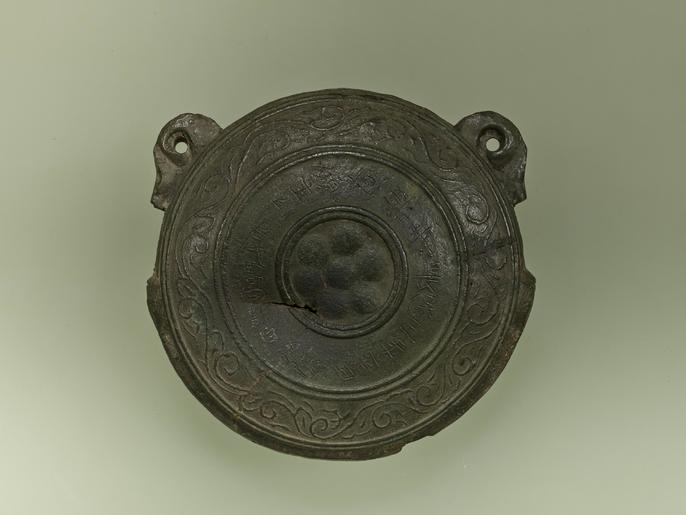
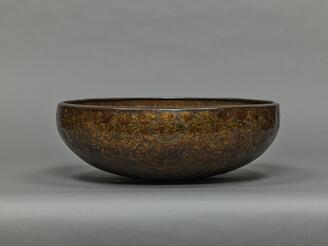
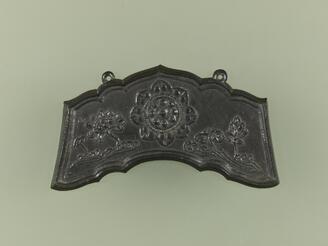
Gongs called [waniguchi] are rung to gain the attention of Buddhist deities before they are prayed to. Over one thousand years old, this is the oldest datable [waniguchi] in existence. If you visit the main hall of a Buddhist temple, you will notice a disk-like object high up in the eaves. A long rope will be hanging down in front of this disc. If you pull this rope and manage to hit the disc cleanly, it will produce a resonant sound. This disc is known as a waniguchi gong. Gongs like this are still used today in many Japanese temples. Worshippers chime them to tell the Buddha they have arrived. In Japanese, “wani” means “alligator” and “guchi” means “mouth.” However, in ancient Japan, when this gong was forged, “wani” meant shark. The gong resembles two flat plates pressed together with a hollow center.
The large slit on the bottom half of the side resembles a shark's mouth, hence the object's name. This opening is there to make the sound more resonant. The gong is cast in bronze, a material selected for its resonance. The gong features an arabesque pattern around the circumference and seven conjoined circles in the center. There is also an inscription in the space between the rim and the center. This recounts how the gong was dedicated by a court official to Gokurakuji Temple in 1001. This dating makes this the oldest extant waniguchi with an inscription of its creation year. Though created about 1,000 years ago, the gong has managed to retain its shape remarkably well.
— Museum description: Tokyo National Museum (CC BY 4.0), via ColBase / Japan Search.