National Treasure
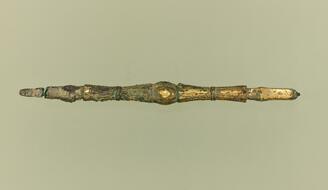
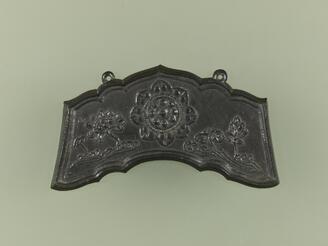
Shiketsu (Posts Erested at Four Corners of Alter to Rope off Sanctuary), Gilt bronze
独鈷
Metalwork · Heian, 12th centuryTNM
Home › Browse › Metalwork › Heian period › Bell with a Five-Pronged Vajra and Characters Symbolizing Deities
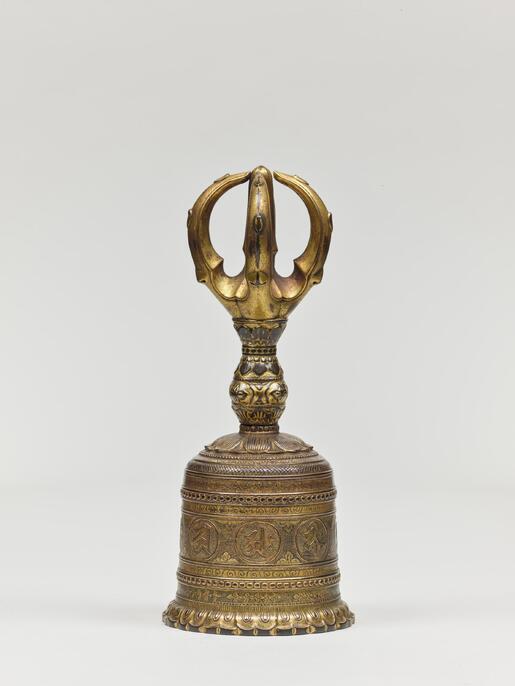
The lower section of this bell is encircled with eight Sanskrit characters, which represent eight Buddhas that appear in Esoteric Buddhist mandalas. Esoteric Buddhism originated in ancient India and spread to China thereafter. At the start of Heian period, a Japanese priest named Kukai travelled to China to study the teachings of Esoteric Buddhism. On his return to Japan, he established a new school known as Shingon Esoteric Buddhism. The central figure in the Esoteric Buddhist cosmos is Dainichi Nyorai, or Mahavairocana in Sanskrit. He is surrounded by a variety of Buddhas, each with a different role. A diverse range of ritual implement are used in Esoteric Buddhism, though these can broadly be divided into two groups. One group contains practical vessels used to make offerings or hold liquids, flowers, or incense. The other group contains pointed weapon-like objects that play a more symbolic role. These are said to be modelled on real weapons from ancient India and they symbolize the striking down of worldly desires and wickedness.
During Esoteric Buddhist ceremonies, these ritual implements are arranged in a set order on the altar, with the priest standing before the altar to perform the ceremony. This ritual bell with a five-pronged handle is an example of one such implement. It is made of bronze and has a gilt-bronze surface. The demon eyes on the central grip imbue the object with a fitting solemnity. These bells were meant to be rung during ceremonies, so they combine symbolism with function. The bell section features eight Sanskrit characters. These represent eight important Buddhas from Esoteric Buddhism. Each Buddha had a designated character. These characters were easy to draw and were often used to represent the Buddhas. The bell also creates a powerful impression with its combination of meticulous engraving and sharp protruding edges. This expressiveness is a characteristic feature of objects from the Kamakura period. We can only imagine how this magnificent bell must have sounded when rung 700 years ago.
— Museum description: Tokyo National Museum (CC BY 4.0), via ColBase / Japan Search.