National Treasure
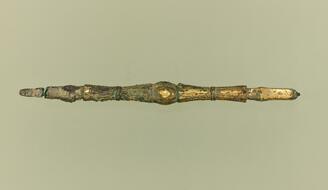
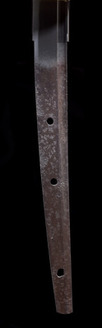
Shiketsu (Posts Erested at Four Corners of Alter to Rope off Sanctuary), Gilt bronze
独鈷
Metalwork · Heian, 12th centuryTNM
Home › Browse › Metalwork › Heian period › Ritual Gong ("Kei") with a Lotus Pond
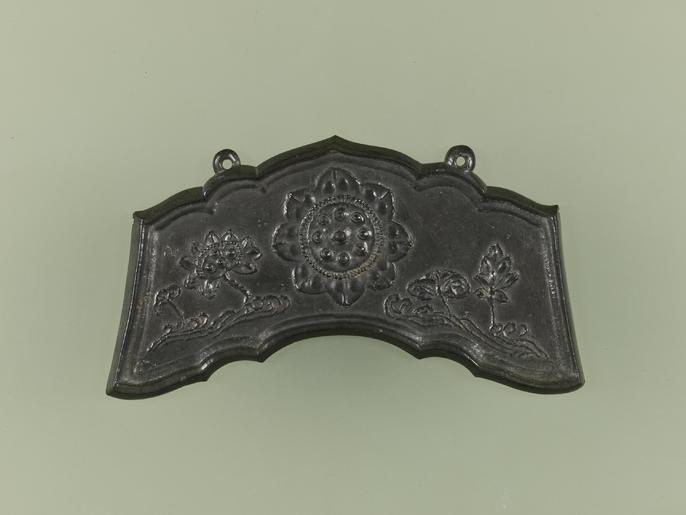
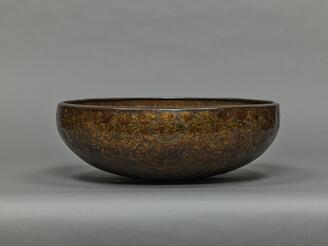
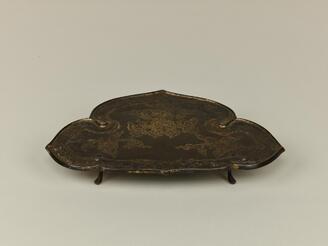
Kei gongs are ritual instruments used in Buddhist ceremonies. They are rung by priests to mark the different stages of the ceremony. They are still widely used in temples to this day. If you visit the main hall of a temple, you will see several seats for priests laid out before a Buddhist statue. You may also see a kei gong like this hanging down close to the seats. The gong will produce a high-pitched chime when struck in the center. Kei gongs were originally used as musical instruments in ancient China. These instruments were made by taking highly-resonant stone materials and sculpting them into shapes resembling triangles with unequal sides. Several gongs of different sizes were hung in a row to produce different tones when struck. It is not known how these instruments came to be incorporated into Buddhist ceremonies. Most kei gongs used in Japanese Buddhism are made of cast bronze rather than stone, and they are shaped like an inverse “V.” This gong is made of an alloy formed by mixing nickel with tin. It seems a relatively large proportion of tin was used to ensure the gong produced a resonant sound when struck.
This also gives the gong a whitish finish. A lotus flower sits in the center. It is surrounded on either side by lotus flowers and leaves stemming out from a pond. Lotus flowers emerge from mud to bloom beautiful and pure. As such, they were cherished as noble flowers in ancient India, where the historical Buddha was born, and they were often used as motifs in Buddhist art. The gong's delicate lotus pattern closely resembles that of a sutra box from Nanatsudera Temple in Aichi. The box's sutras date back to the 12th century, so this kei gong was also probably made around this time. Buddhist monks would strike this type of gong during rituals. Shaped like a mountain, this gong features a lotus flower flanked by lotuses blooming in a pond ― a metaphor for enlightenment. Designs featuring a lotus pond, which probably symbolized the Pure Land, were popular at the time, likely influenced by the rise of Pure Land Buddhism.
— Museum description: Tokyo National Museum (CC BY 4.0), via ColBase / Japan Search.