National Treasure
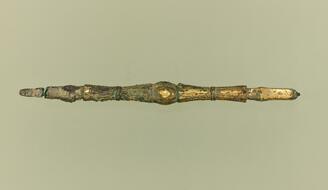
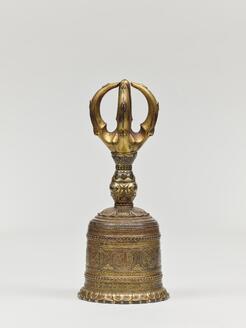
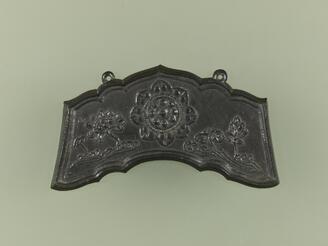
Shiketsu (Posts Erested at Four Corners of Alter to Rope off Sanctuary), Gilt bronze
独鈷
Metalwork · Heian, 12th centuryTNM
Home › Browse › Metalwork › Heian period › Octofoil Mirror with Auspicious Flowers and Paired Phoenixes
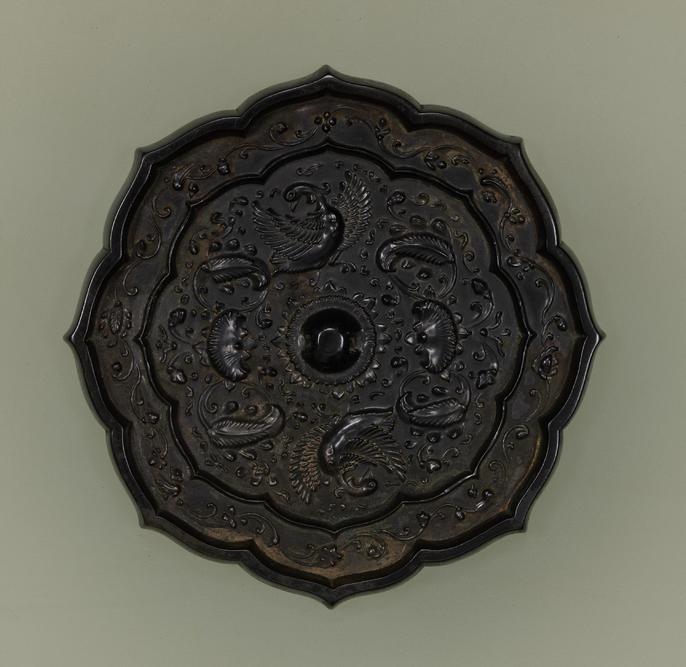
Glass mirrors only took off in Japan from the late 19th century onwards. Before then, mirrors were made exclusively of bronze. The bronze was heated into liquid form and poured into a mold, with one side then burnished until capable of reflection and the other side decorated with various motifs. Bronze mirrors were first brought to Japan from China around the 2nd century BC. Many mirrors from Tang-dynasty China then arrived on Japan's shores in the 8th century, with copies of these subsequently produced within Japan itself. From the 10th to the 12th century, mirror shapes and designs gradually changed. This led to the emergence of bronze mirrors with uniquely Japanese forms and motifs. The back of this bronze mirror features a floral arabesque pattern and a pair of phoenixes around the central nub where a cord was threaded.
This type of eight-lobed mirror first emerged during the late 7th century in Tang dynasty China. They originally featured a contrasting design of two phoenixes and two flowering plants. When Japanese copies were made, the phoenixes came to resemble mandarin ducks, while the flowers spread to cover the entire backdrop. This mirror represents one of the finest examples of a Japanese eight-lobed mirror. A high level of craftsmanship is on display in the bold three-dimensionality of the design. This type of eight-sided bronze mirror first appeared in the latter half of the 7th century in China. In Japan, numerous mirrors of this type were created from the 9th to the 12th century. Initially, a design featuring auspicious birds and flowers positioned in this manner was preferred in Japan.
— Museum description: Tokyo National Museum (CC BY 4.0), via ColBase / Japan Search.