National Treasure

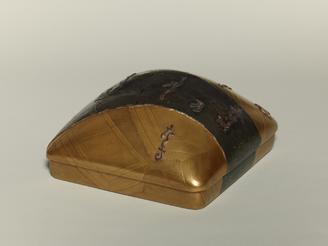
Box for Personal Items with a Design of Carriage Wheels in Water
片輪車螺鈿手箱
Lacquerware · Kamakura, 13th centuryTNM
Home › Browse › Lacquerware › Muromachi period › Writing Box with Scenery of Mount Shio

This is a “writing box,” used to store inkstones, brushes and other writing implements. It is thought that boxes of this type were first produced in Japan during the 10th century. Most were made of wood, and some were decorated using techniques such as lacquer work, designs created by sprinkling gold powder onto a lacquered surface, or mother-of-pearl work, patterns formed of cut pieces of mother-of-pearl inlaid into a surface. The contents of the boxes gradually became more standardized, as did the designs on the implements and the inner and outer surfaces. More compact, refined boxes began to be produced. These improved boxes eventually became an essential part of any writing set. Highly ornate writing boxes with sophisticated designs were popular among aristocrats, Buddhist priests, samurai, and other powerful figures who made use of writing. Take a look at this writing box. It is made entirely of wood and has a lacquered surface with designs in gold and silver. Above the inkstone sits a bronze water dropper designed to hold the water used when making ink on the inkstone. The two shallow containers to either side of the inkstone are removable and probably held brushes, small knives, and other tools. The lower half of the surface of the lid features a design of sandbars and boulders with a pine tree standing on the righthand side.
Flocks of plover fly above and frolic on the sand and stones. The rear surface of the lid and inner surface of the box feature similar designs. A number of lacquerware techniques incorporating gold and silver are used, including layers of powdered gold in varying degrees of thickness along with small pieces of gold and silver and thin silver sheets affixed with lacquer. This box is thought to be a product of the 15th century, an era in which many compact, refined writing boxes were produced and a range of sophisticated techniques for applying gold powder existed. Two large Chinese characters are visible on the boulders. These two characters are taken from a waka poem published in a collection compiled in the early 10th century. The lacquer work designs depict a famous scenic spot in present-day Yamanashi Prefecture celebrated in that poem. The incorporation of scenes or text from classical literature, such as famous tales or poems, is a common feature of Japanese art. Boxes for writing tools are often decorated with subtle references to literature. Here, the lid depicts a flock of plovers, with words concealed on the rocks below. These motifs allude to a verse from an imperial poetry anthology: “The plovers on the rocky shore beneath Mount Shio cry out, ‘May the emperor’s reign last eight-thousand years!’”
— Museum description: Tokyo National Museum (CC BY 4.0), via ColBase / Japan Search.