National Treasure

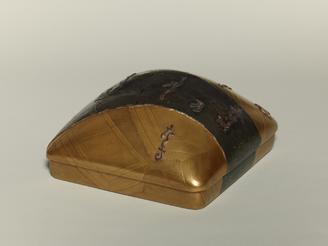
Box for Personal Items with a Design of Carriage Wheels in Water
片輪車螺鈿手箱
Lacquerware · Kamakura, 13th centuryTNM
Home › Browse › Lacquerware › Muromachi period › Box for Personal Items with a Design of Scattered Fans

Tebako are large boxes used to store small personal accoutrements like cosmetics or stationary. Boxes like this have been used in Japan for a long time. Many are lavishly decorated using intricate techniques like maki-e, whereby gold or silver powder is sprinkled onto lacquer to create a design, or a technique whereby flattened pieces of mother-of-pearl are cut into a pattern and inlaid into the surface. The surface of this cosmetic box is scattered with fans rendered in gold maki-e. There are 28 fans in total, some open and others closed, for example. The fans themselves are decorated with mountains, clouds, flowing water, and seasonal trees and flowering plants, all motifs traditionally cherished in Japan and commonly depicted in paintings and decorative objects.
Some gold areas are raised to create a three-dimensional impression. This maki-e technique is a common feature of lacquerware objects from the 15th century. Fans have been used in Japan since ancient times, with their surfaces adorned with a diverse range of pictures and designs. The practice of incorporating richly-varied fans into the designs of paintings and craft works first emerged in the 14th century and became very popular thereafter. Women stored cosmetics and other personal items in lacquered boxes called [tebako], meaning “box on hand.” Crafted in the 1400s, this example features a traditional design known as scattered fans. The artist painstakingly decorated each fan with nature scenes using a combination of gold and lacquer.
— Museum description: Tokyo National Museum (CC BY 4.0), via ColBase / Japan Search.