National Treasure
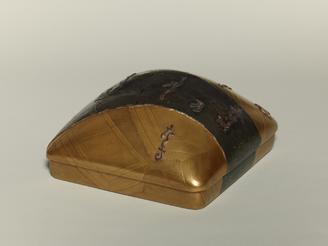
Writing Box with a Pontoon Bridge
舟橋蒔絵硯箱
Lacquerware · Edo, 17th centuryTNM
Home › Browse › Lacquerware › Edo period › Writing Box with a Brushwood Fence and Ivy

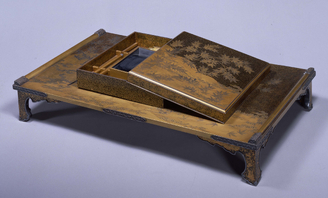
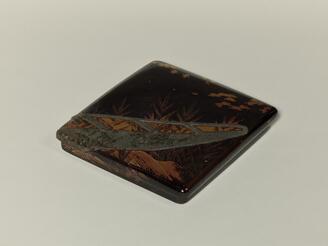
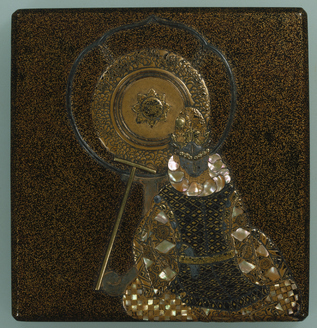
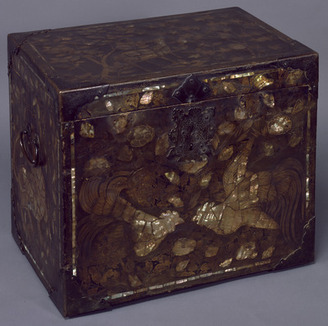
This exquisitely decorated box shows a rustic fence covered with ivy. The decoration is by Koma Kyūi, who served the samurai government of Japan as their official lacquer artist. This is a “writing box,” used to store inkstones, brushes, and other writing implements. It is thought that boxes of this type were first produced in Japan during the 10th century. Most were made of wood and were often decorated in designs created by sprinkling gold powder onto the lacquered surface or by inlaying pieces of mother-of-pearl. This writing box is made of wood with a black lacquered surface and designs in gold and silver. An extremely intricate design, primarily in gold, of ivy twining around a hedge made of bundles of brushwood extends over the surface of the lid and the sides of the box. Red is used to depict leaves colored by the deepening autumn. It is a calm, quiet autumn scene. In contrast, the base tray inside the box, which holds the water dropper and inkstone, is decorated with gold and silver designs of riverside reeds and slanted rainfall.
The inner surface of the lid also bears a design of an egret flying through rain. It is painted with a light touch that gives an impression of motion. The interior and exterior designs of the box form a vivid contrast that is unified in the form of a writing box. In any case, the delicate and variegated technique and outstanding pictorial expression, which captures motion and changes of color, seen in this writing box were not present in earlier works that employed gold and silver designs on lacquer. The name “Koma Kyūhaku” inscribed in gold on the inner surface of the lid identifies this writing box as the work of Koma Kyūi. The Koma family was a family of gold and silver lacquer artisans who served the Tokugawa shogunate for generations. Kyūi was the first of his line and is said to have been engaged by the shogunate in 1636. The second, third, and fifth generation Koma artisans later adopted the name “Kyūhaku” seen in the inscription.
— Museum description: Tokyo National Museum (CC BY 4.0), via ColBase / Japan Search.