National Treasure

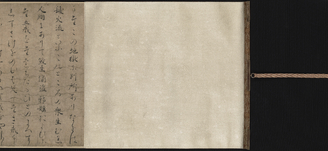
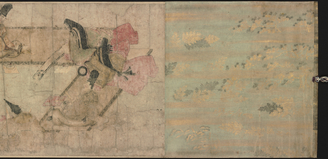
Bound Fan Papers with the Lotus Sutra
扇面法華経冊子
Paintings · Heian, 12th centuryTNM
Home › Browse › Paintings › Heian period › The Bodhisattva Juntei Kannon
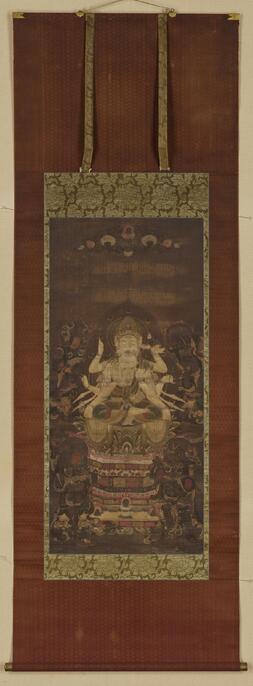
Cundi is a deity from the Ono tradition of Shingon Esoteric Buddhism, a tradition with Kyoto's Daigo-ji temple at its center. Cundi was one of the six main bodhisattvas charged with saving all beings suffering in the six realms of existence, also serving as the principal image in rituals to ward off calamities or to pray for long life and safe births. In particular, Cundi became the object of prayers for pregnancy or safe deliveries during the Heian period when Emperor Daigo was blessed with two sons after praying to the deity for an heir. Cundi is usually depicted alone, but in this rare exception sits in a central position surrounded by the Four Guardian Kings, or the Shitenno in Japanese. This portrayal uses bright, neutral tones, with Cundi outlined using light, red lines of a fixed thickness. The intricate golden patterns of the clothes, along with other parts, are created with thin, hair-like strips of gold foil. Furthermore, the undulations of the calf section use teriguma, a shading technique whereby white pigments are added to darker colors to produce a highlighted, three-dimensional effect, while the pleats of the robe are rendered using danguma, a technique that creates a sense of three-dimensionality through gradations of darkish hues.
Together, these techniques produce a soft, elegant atmosphere so characteristic of Buddhist paintings from the 12th century Insei period, when retired emperors held great political power. In contrast, the Four Guardian Kings are portrayed using black ink lines and subdued tones. Their dynamic poses and billowing clothes create a powerful impression more reminiscent of the later Kamakura period. As such, this work symbolizes the transition from the Heian period to the Kamakura period. The teriguma technique adds white pigments to darker colors to produce a highlight effect. The danguma technique creates a sense of three-dimensionality through gradations of darkish hues on a similarly-toned ground. Kannon is among the most compassionate and widely worshiped Buddhist gods in Japan. Dating to the 1100s, this painting shows Kannon wearing delicate robes meticulously patterned in gold leaf. He is surrounded by wrathful guardian gods equipped with weapons and armor to repel the enemies of Buddhism. Monks would have prayed to this image for the salvation of all living beings trapped in the cycle of reincarnation and suffering.
— Museum description: Tokyo National Museum (CC BY 4.0), via ColBase / Japan Search.