National Treasure
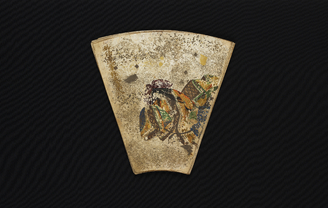
Bound Fan Papers with the Lotus Sutra
扇面法華経冊子
Paintings · Heian, 12th centuryTNM
Home › Browse › Paintings › Heian period › Imaginary Journey through Xiaoxiang
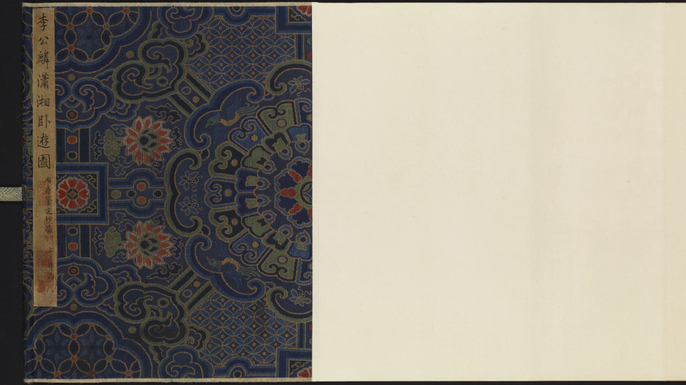
This landscape painting in handscroll format is regarded as a masterpiece among masterpieces. It was adored particularly by the Qianlong emperor, who ruled at the height of the Qing Dynasty. According to the text at the end of the scroll, this work was created during the Southern Song dynasty in the 12th century for the Zen monk Yungu Yuanzhou. This monk loved to travel, and he visited a variety of places, but was unable to visit the Xiaoxiang area in Hunan province, which is famous for its beautiful scenery. He regretted this greatly, and in his old age, when he returned to live a secluded life in his hometown, he commissioned the artist Li to paint this work depicting the scenery of Xiaoxiang. Thus, even within the confines of his home he could experience, as the title of this work suggests, an “imaginary trip” to the area.
Xiaoxiang is the area where two rivers known as Xiao and Xiang merge, flowing into Dongting lake. In this depiction of the area, people are shown leading peaceful lives among gently sloping mountains and abundant foliage enveloped in humid air. The artist carefully layered light tones of ink to skillfully capture the soft light reflected within the haze, and with incredibly thin brushstrokes he depicted the fishing boats, the reeds along the shore, and a flock of wild geese in the air. The result is a rich landscape that reveals something new every time it is examined. The Zen monk Yun'gu Laoshi traveled widely on pilgrimages but failed to visit the Xiaoxang region. He therefore asked Li to paint its spectacular scenery, so he could make an imaginary journey through the region.
— Museum description: Tokyo National Museum (CC BY 4.0), via ColBase / Japan Search.