National Treasure

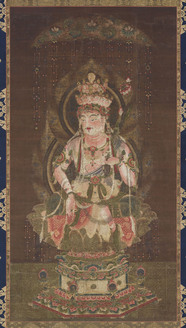
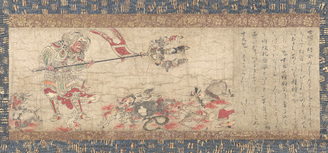
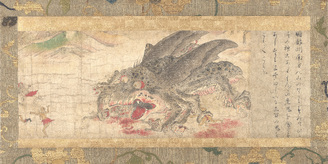
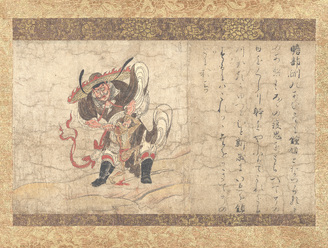
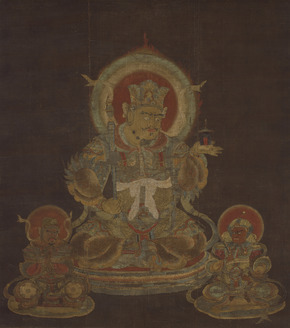
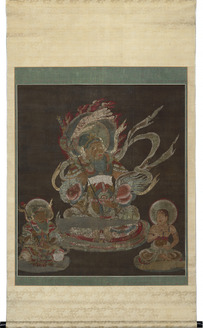
Bishamon Ten (Vaiśravaṇa), Extermination of Evil (J., Hekija-e)
辟邪絵 毘沙門天像
Paintings · Heian, 12th centuryNara NM
Home › Browse › Paintings › Heian period › Hell Scroll

{i=>[jigoku, emaki], content=>[There are Six Realms (Rokudō) into which one can be reborn at death, and those who have committed serious offenses fall into the realm of the Buddhist hells (, ). This painting is part of a masterwork illustrated handscroll (, ) that depicts some of the various sub-hells comprising the most dreadful of the Six Realms. Seven sub-hells are shown, including the Hell of the Flaming Rooster.]} It is conceivable that the Scroll of Hells, as well as the Scroll of Hungry Ghosts, was based on the idea of metempsychosis or the cycles of life in the Six Realms. That idea was popular at the end of the Heian period. The Six Realms consist of hell, hunger, beasthood, Ashura (Asura or evilness), human beings, and heaven. All the creatures were supposed to live in those six realms in turns. The scroll introduced in this article is a segment from the complete scroll and was once kept in Daishō-in temple in Tokyo; afterwards it was kept by the Hara family in Yokohama.
This scroll covers seven infernal scenes which were taken from sixteen tortures in eight infernos based on the description in the Kise-kyō sutra (ch'i-shih-yin-pên-ching). The first chapter describes the inferno of excrement, the second chapter the inferno of measures, the third chapter the inferno of iron mill, the fourth chapter the inferno of a rooster, the fifth chapter the inferno of hot sand from black clouds, the sixth chapter the inferno of bloody pus and the seventh chapter describes some unidentified inferno. The scenes are represented by dynamically drawn lines and bold compositions. The contrast of black, which symbolizes the darkness of hell, and vermilion, which symbolizes the flames of guilt, gives a strong impression and it makes the scroll ghastly and at the same time beautiful.
— Museum description: Nara National Museum (CC BY 4.0), via ColBase / Japan Search.