National Treasure

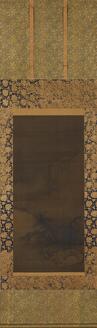
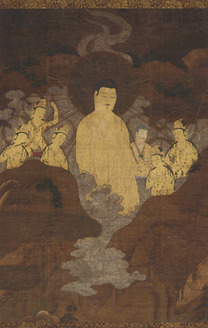
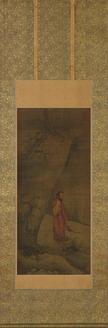
Bishamon Ten (Vaiśravaṇa), Extermination of Evil (J., Hekija-e)
辟邪絵 毘沙門天像
Paintings · Heian, 12th centuryNara NM
Home › Browse › Paintings › Kamakura period › Fudō Myōō (Acalanātha) and Eight Child Acolytes (Kumāras)

{i=>[kumāra], content=>[Fudō Myōō (Skt. Acala) is seated on his characteristic rock throne, his right leg pendent. The attendants that accompany him are the Eight Child Acolytes (Skt. , ); they are rarely depicted, making this painting all the more valuable. There are many similarities between the forms in this painting and those seen in the “Iconographic Drawings of Fudō Myōō,” also in the collection of the Nara National Museum. The painting comes from Shakamon’in Temple at Mount Kōya.]} Fudō-myō'ō (Acalanātha) was supposed to have the power to eliminate obstacles to Buddhism. As he was supposed to have been sent on a mission by Dainichi-nyorai (Mahāvairocana), he is sometimes called Fudō Shisha (Emissary Fudō). In turn, eight young attendants (Kumāras), including Kongara (Kiṃkara) and Seitaka (Ceṭaka), work as Fudō-myō'ō's emissaries.
The figure of Fudō-myō'ō introduced in this article follows the Buddhist painter Genchō's iconographical style, which was established during the Heian period, whereas the styles of the images of the eight attendants were probably created by the artist, who may have referred to several different iconographical styles. The flaming halo consists of the shapes of three sacred birds called Karura (Garudas). The fire is arranged in such a way as to surround all the figures in the painting, so that the power of Fudō, which is burning down all the evil obstacles, is emphasized. It is notable that there are hardly any decorative aspects in this painting, and gold or silver are hardly used. As a result, the emphasis is on the outlines of the figures.
— Museum description: Nara National Museum (CC BY 4.0), via ColBase / Japan Search.