National Treasure

Snowy Landscape
雪景山水図軸
Paintings · Kamakura, 13th centuryTNM
Home › Browse › Paintings › Kamakura period › “The Emperor Escapes to Rokuhara” from The Illustrated Tale of Heiji

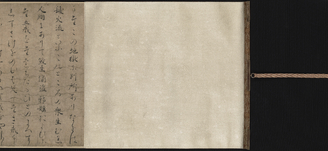
This scroll depicts the events of the Heiji Civil War, which began during the late Heian period in 1159, the first year of the Heiji era. The conflict was fought between the warriors Taira no Kiyomori and Minamoto no Yoshitomo. It developed from a power struggle between two court nobles, Fujiwara no Nobuyori and Fujiwara no Michinori. Of the original 'Narrative Picture Scrolls of the Chronicle of the Heiji Civil War,' only three scrolls and around a dozen or so fragments still remain, with one scroll stored at the Museum of Fine Arts, Boston, one at the Seikado Bunko Art Museum in Tokyo, and one here at the Tokyo National Museum. This museum's scroll is titled 'The Removal of the Imperial Family to Rokuhara.' It features Emperor Nijo, who has been placed under house arrest by the Minamoto clan. It shows him sneaking away from the Imperial Palace disguised as a lady and being taken to Taira no Kiyomori's residence in Rokuhara. Let's take in the whole scroll first. The group scenes have been depicted skillfully by varying the size of the groupings and arranging them in a certain way to create a sense of dynamism. Let's take a closer look now. With their toned, muscular legs, the warriors exude a vigorous physicality. The characters are each imbued with rich expressions, with some shouting, some laughing and others appearing full of vexation. The nimble brush lines and beautiful colors masterfully depict the tense atmosphere of upheaval. This scroll must have been painted by the finest artists of the time. What kind of people do you think commissioned this superlative work? There are some clues in the picture itself.
Though the nobles are depicted with handsome, white faces, for example, the warriors look more vulgar, with bulging eyes and hooked noses. The humble, cowed appearance of the strictly-disciplined warriors also speaks volumes. This all suggests that those who ordered this work were connected with the nobility. This scroll depicts a major turning point in history, when political power was shifting from the nobility to the warrior class. It was the nobility who ordered their departure from the political stage to be recorded. Perhaps this work reflects their desire to hold sway over the warrior class, even if only within the confines of an illustrated scroll. In 1159, Japan experienced a historic civil war known as the Heiji Rebellion. Two powerful samurai clans, the Taira and Minamoto, clashed for political control of the imperial capital Kyoto. This conflict was a turning point, contributing to the rise of the samurai and the decline of imperial authority. A handscroll titled [The Illustrated Tale of Heiji] depicts these events in vivid detail. In the scene shown here, Minamoto forces hold the emperor captive in the Imperial Palace as they plot to seize power. The rival Taira clan mounts a daring rescue, disguising the emperor as a noblewoman and spiriting him away in a royal oxcart. The scroll’s meticulous linework and richly expressive figures suggest it was painted by the leading artists of the time, though their identities remain unknown.
— Museum description: Tokyo National Museum (CC BY 4.0), via ColBase / Japan Search.