Important Cultural Property
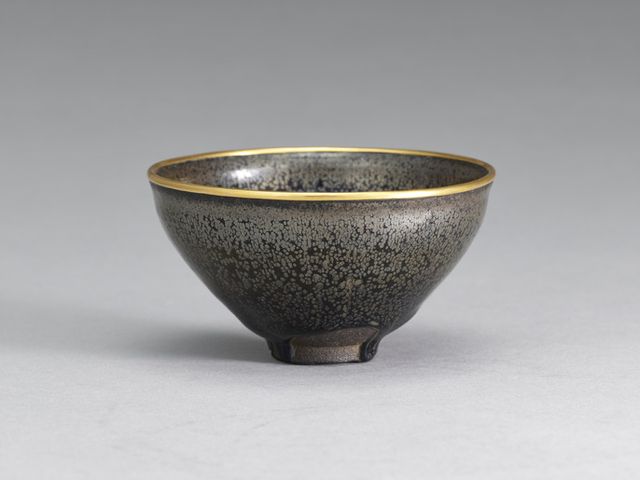
Tea bowl (yuteki tenmoku type)
油滴天目
Ceramics · Southern Song dynasty (China)Kyushu NM
Tenmoku — the iron-glazed bowls of China's Jian kilns — were the supreme tea bowls of medieval Japan, treasured by shoguns and tea masters. The honest headline first: this catalogue holds exactly one tenmoku-type bowl. The three great Yōhen Tenmoku are temple treasures, never accessioned to a national museum. So this trail does what the collection allows: it starts from that one dark bowl and reads outward into the tea room — celadon, Shino, Shigaraki, and the painted porcelain of Kyoto.
The Yuteki Tenmoku bowl at the Kyushu National Museum: “oil-spot” tenmoku, its dark glaze flecked with silver constellations. Jian ware, Kensan shape — the medieval ideal, imported whole.
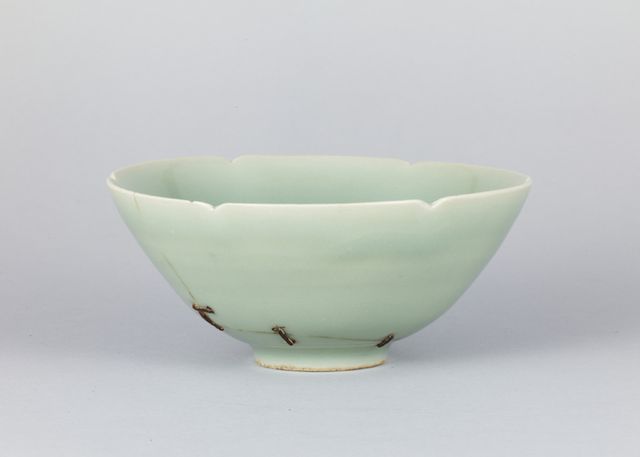
The celadon tea bowl named Bakōhan — “horse-leech bond” — for the repair-like pattern at its rim. Longquan ware, and proof that a flaw, named well, becomes a biography.
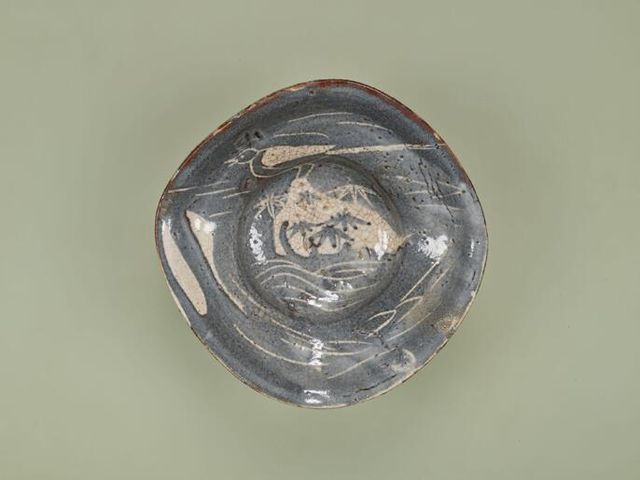
A Shino bowl with a wagtail, from the Mino kilns: Japan's own answer to the imported canon, white Shino glaze painted in iron brown.
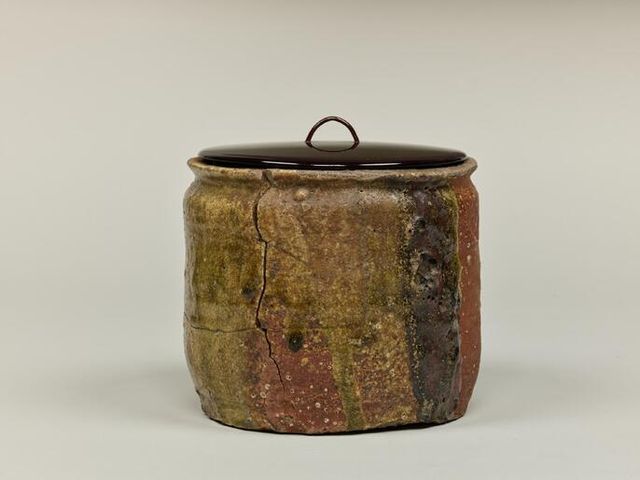
The Shigaraki water jar named Shibano Iori — “grass hut”. Tea ware is a household, not a single bowl: water jars, tea-leaf jars and bowls worked together.
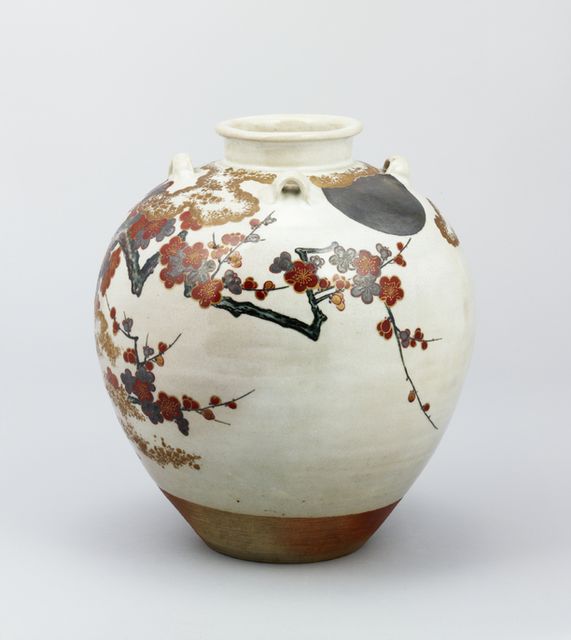
Nonomura Ninsei's tea-leaf jar with the moon and plum blossoms in overglaze enamel: Kyoto porcelain joins the tea room, colour arriving where ash and iron had ruled.
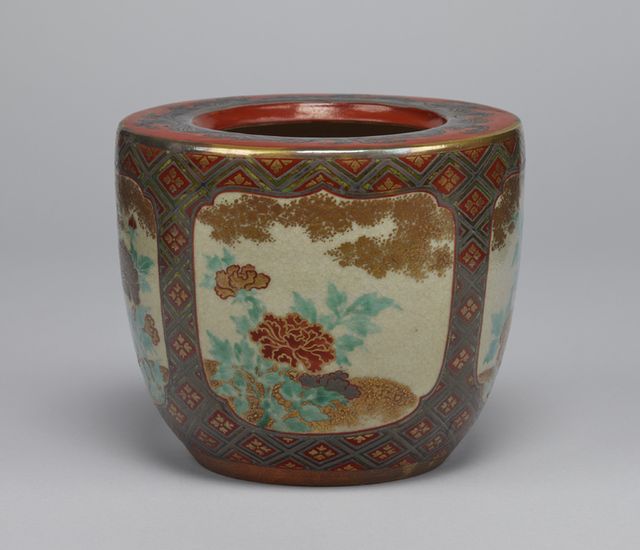
Ninsei again, a water jar with peonies. The trail ends in the Edo tea room, where the tea bowl's supporting cast had become art in its own right.
Ceramics is this catalogue's smallest great subject: 32 works, no National Treasures, and a canon shaped by absence. The explainer page tells the same story for buildings — and it is the same reason.