National Treasure
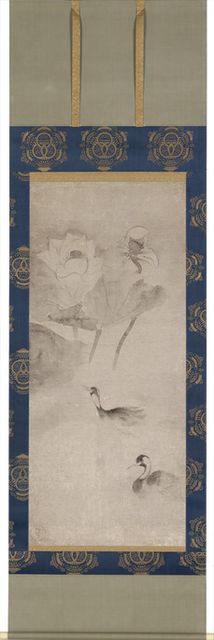
Waterfowls in Lotus Pond
蓮池水禽図
Paintings · Edo, 17th centuryKyoto NM
Rinpa is less a school than a relay: Tawaraya Sōtatsu's bold design sense, taken up a century later by Ogata Kōrin, and again by Sakai Hōitsu, who published Kōrin's works and painted in his honour. Gold grounds, flattened nature, literature turned into pattern. This trail follows the relay through the works in national hands — including the most famous Japanese screen of all, which is, on paper, only an Important Cultural Property.
Sōtatsu's Waterfowls in a Lotus Pond — a National Treasure, and the trail's fountainhead: natural observation turned into design, a generation before the word Rinpa existed.
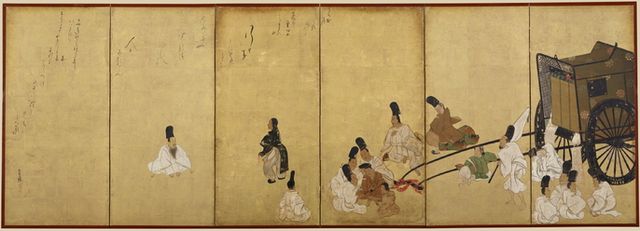
Sōtatsu's screen of the Gatehouse chapter of The Tale of Genji. Rinpa begins in literature as much as in painting: the classics, quoted in gold and colour.
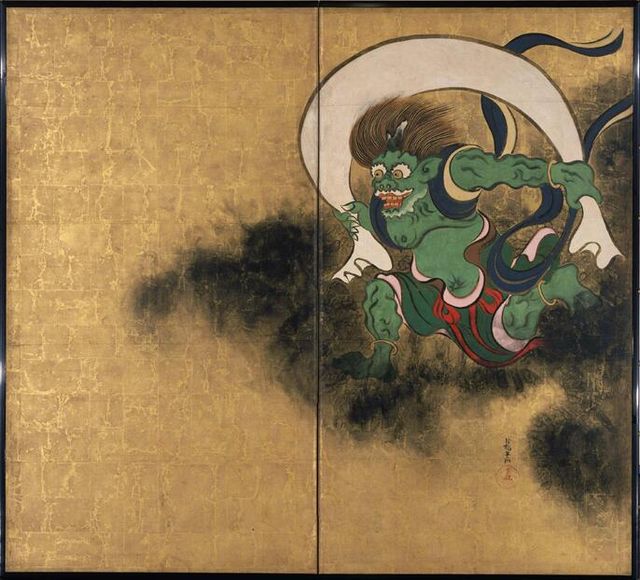
Kōrin's Wind God and Thunder God — the screen everyone knows, after Sōtatsu's original. Kōrin copied his predecessor so closely that the copy became the icon; designation calls it an Important Cultural Property, fame disagrees.
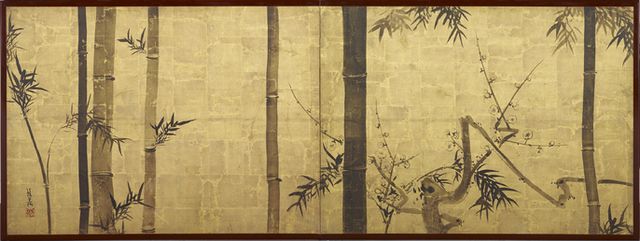
Kōrin's Bamboo and Plum screen: the same designerly eye at a smaller scale, seasonal plants as pure pattern.
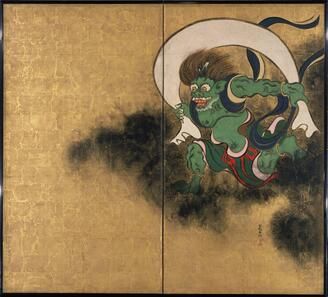
The relay completed: Kōrin's Wind God and Thunder God on one side, Sakai Hōitsu's summer and autumn plants on the other — master and admirer mounted as a single pair of screens, a century apart.
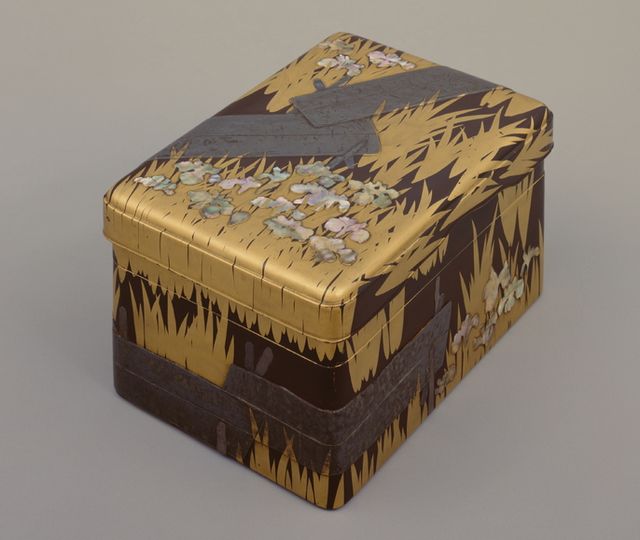
Kōrin's Yatsuhashi writing box, a National Treasure in lacquer: the iris bridge from The Tales of Ise, in gold and mother-of-pearl. Rinpa was always a design language, not only a painting style.
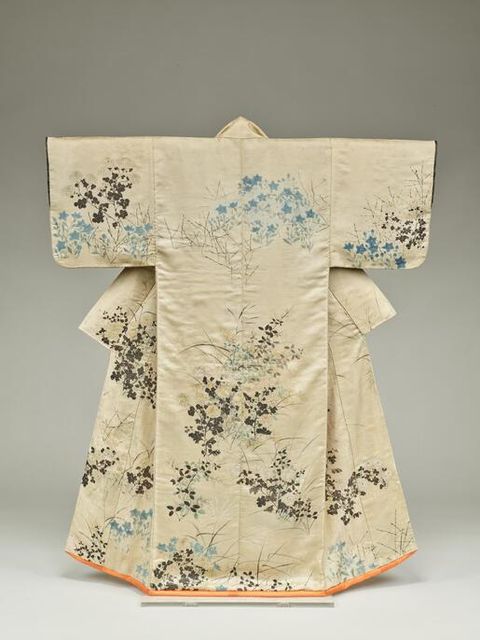
Kōrin as fashion designer: a kosode with autumn grasses on white silk. The trail ends where Rinpa always intended to end — in the worn, the used, the lived-with.
The Irises at Nezu and the Red and White Plum Blossoms screens are Rinpa's other summits; they belong to a private museum and a museum of modern foundation respectively, outside this catalogue's collections. What is here is enough to see the relay whole.