Important Cultural Property
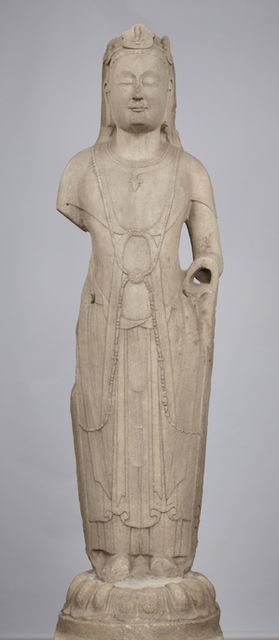
The Bodhisattva Avalokiteśvara
観音菩薩立像
Sculpture · Asuka, 585TNM
Six statues, twelve centuries. Buddhist sculpture is where Japanese art begins, and this trail reads its whole arc through the national collections — gilt bronze from the continent-facing Asuka age, the one National Treasure this category holds, and a final Edo image carved for a faith that had to hide.
An Asuka-period Avalokiteśvara (Kannon): gilt bronze, elongated, serene — Buddhism still speaking with a continental accent.
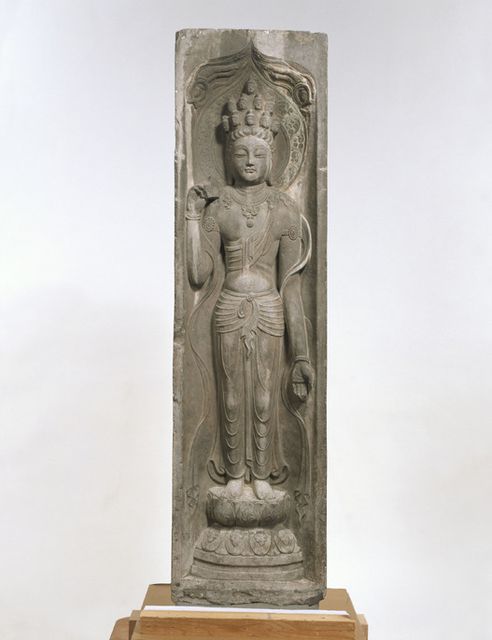
An Eleven-Headed Kannon of the Nara period, at the Nara National Museum: the bodhisattva of compassion given eleven faces to see every suffering at once.
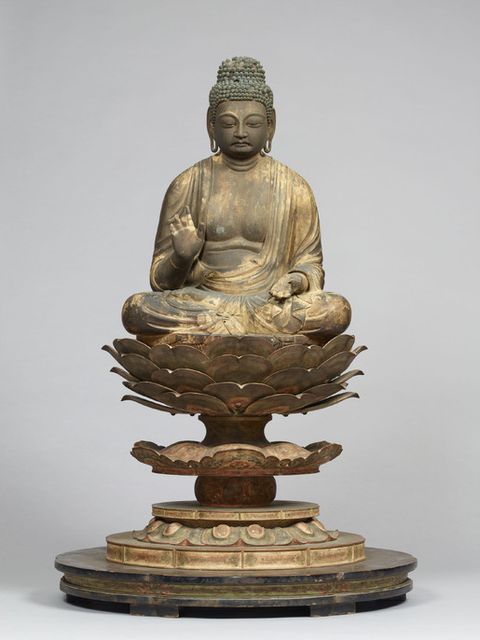
The category's single National Treasure: a seated Yakushi, the Buddha of healing, Heian period. One statue carries the designation for 315 — designation measures survival and custody as much as beauty.
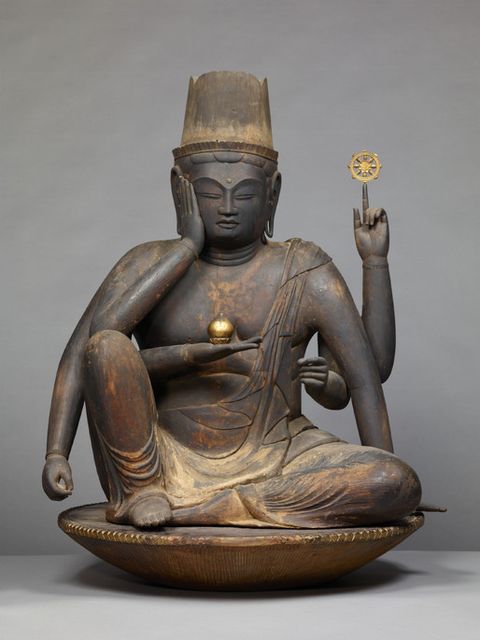
A seated Nyoirin Kannon, Heian: chin in hand, leg folded, the most introspective pose in the Buddhist repertoire.
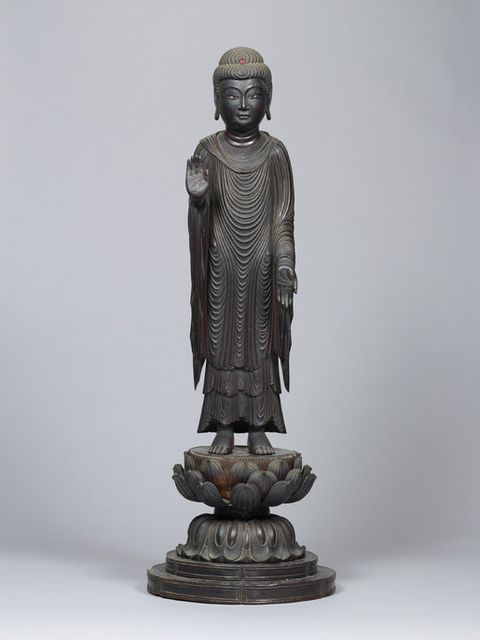
A Śākyamuni of the Seiryōji type, Kamakura period: a copy of a copy of a Chinese icon, carved when sculptors pursued presence over ideal form.
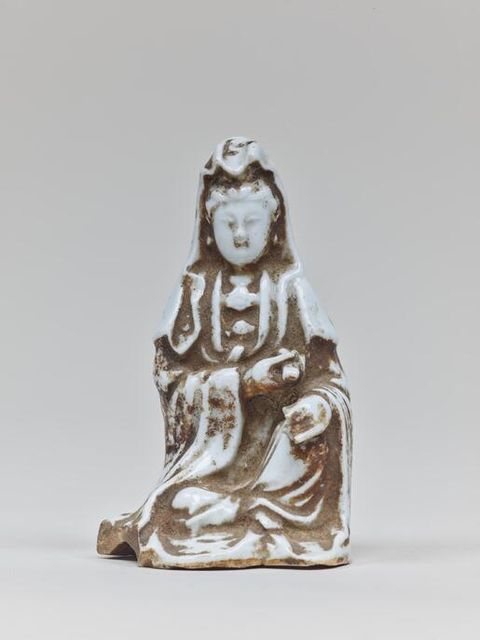
A Maria Kannon of the Edo period: the Virgin Mary in Kannon's form, venerated in secret by hidden Christians. The trail that began with an imported faith ends with one in disguise.
The Sculpture hub holds the full 315. Its odd shape — one National Treasure, a long Edo tail — is explained in the hub's own introduction.