National Treasure
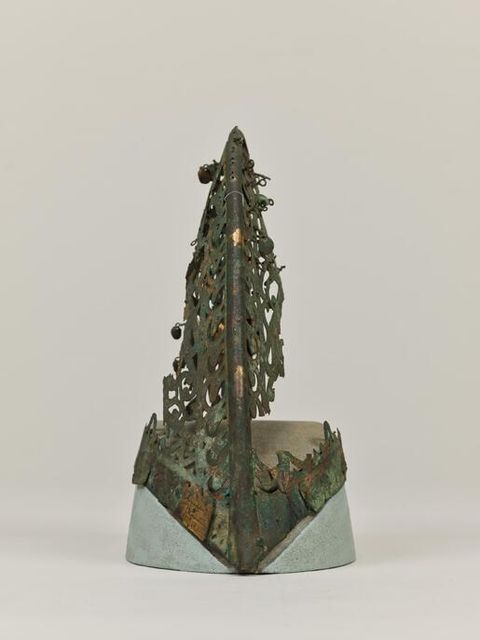
Gilt Bronze Crown
金銅製冠帽
Archaeological Objects · Kofun, 401–600TNM
Between the 3rd and 6th centuries, Japan's chieftains were buried in enormous keyhole-shaped tombs, dressed for eternity. The richest excavated tomb groups reached the Tokyo National Museum as sets — regalia in gilt bronze, weapons in iron and silver — and five of this trail's six stops are the thickened, fully edited entries of a single glittering complex: crown, shoes, earrings, armour and an inscribed sword.
A gilt-bronze crown: openwork gold-toned bronze that caught firelight on a chieftain's head. Kofun regalia at its most theatrical.
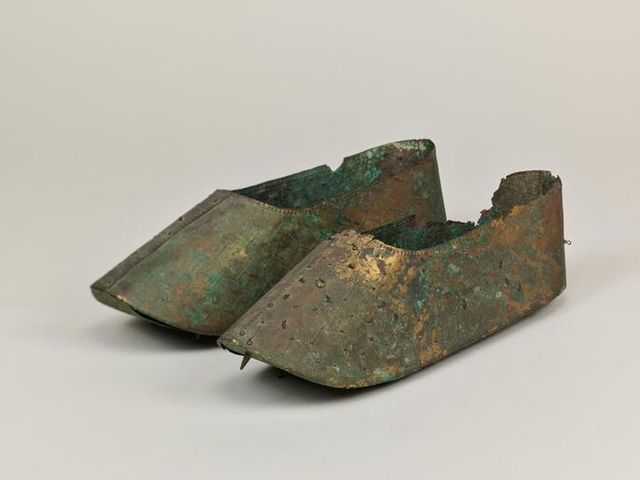
Gilt-bronze shoes to match — the dead ruler was dressed head to foot in shining bronze for the next world.
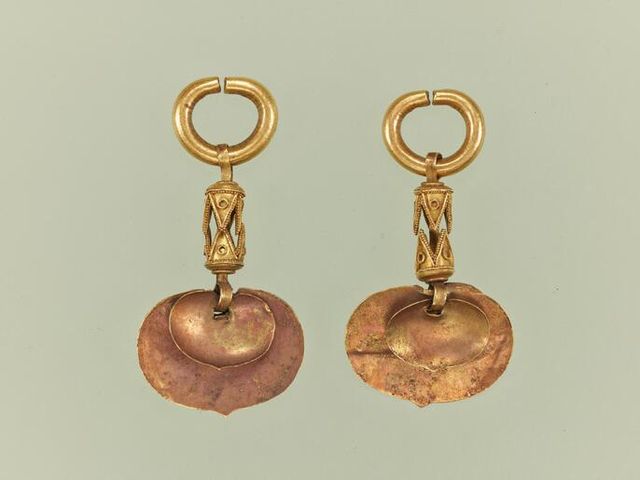
Gold earrings: the smallest stop on the trail, and the material at its purest.
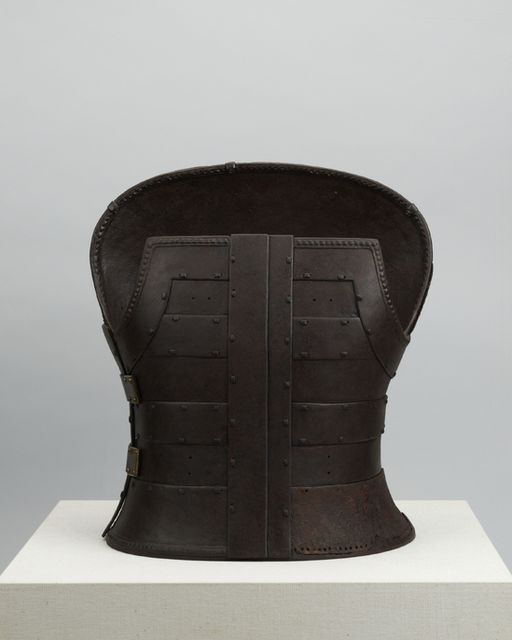
A tankō cuirass of horizontal iron plates laced with leather — the iron half of the trail's title, and a document of 5th–6th century warfare.
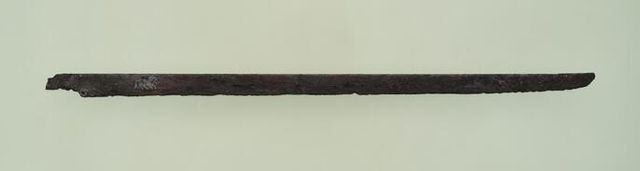
A great sword with a silver-inlaid inscription. Inscribed blades are documents: someone, in the Kofun period, wanted a name to survive.
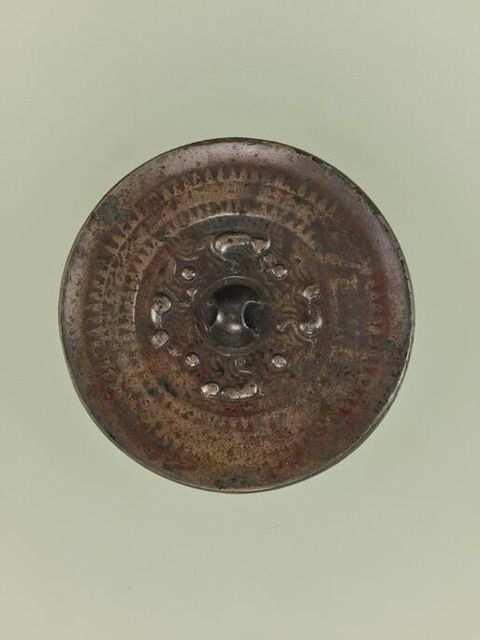
A bronze mirror with four beasts, a National Treasure: the tomb's cosmos in a disc, cast with the creatures of the four directions.
The Archaeological Objects hub and the Kofun period hub hold the wider field — mirrors by the dozen, haniwa, beads — including the large groups catalogued under single representative entries.