National Treasure
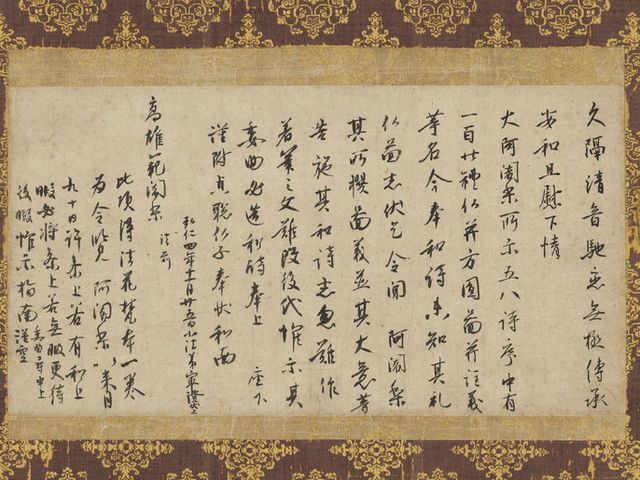
Letter by the priest Saichō
最澄筆 尺牘(久隔帖)
Calligraphy & Books · Heian, 9th centuryNara NM
Paper is the frailest medium in this catalogue and its greatest survivor. This trail follows the brush through four centuries: two monk-founders writing at the start of the Heian period, the imperial poetry anthology copied at its height, and the single leaves — treasured fragments of books that no longer exist whole.
Saichō's letter, the Kyūkakuchō: the founder of Tendai writing a working letter. National Treasure calligraphy begins, fittingly, with an actual piece of correspondence.
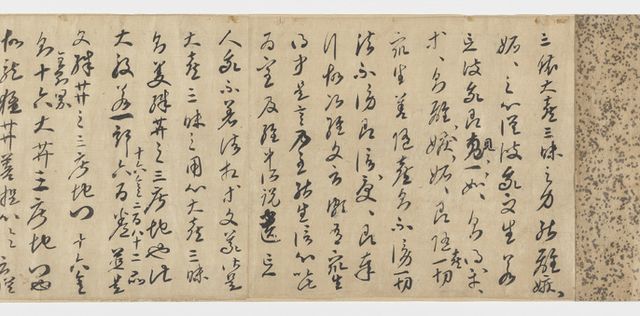
Kūkai's commentary on the Diamond Sutra, thirty-eight lines surviving: the founder of Shingon was also the age's most celebrated brush, and this is his hand thinking.
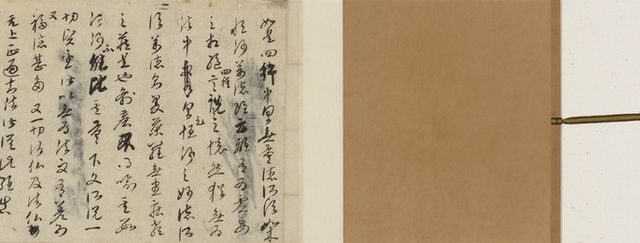
A second segment of Kūkai's Diamond Sutra commentary, held in Kyoto — one work of writing, two museums, two catalogue pages. Fragments travel.
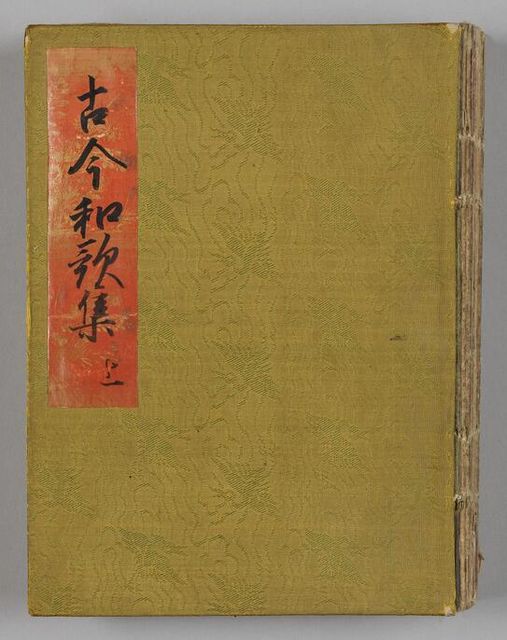
Volume one of the Gen'ei Kokinshū: the imperial anthology of waka, copied in the Gen'ei era, kana calligraphy at its most refined.
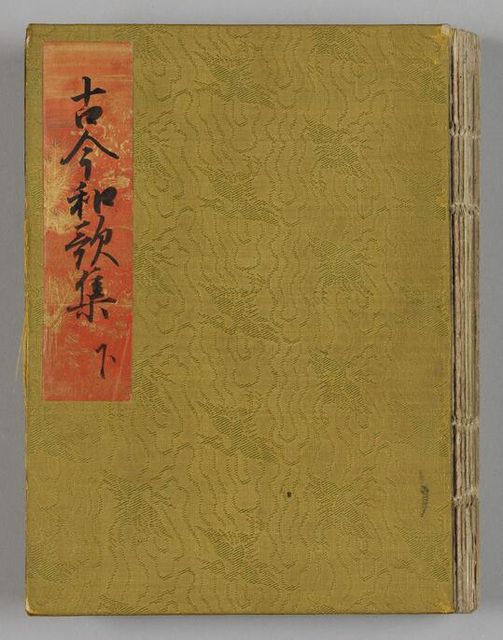
Volume two, its pair. Together the two volumes are the closest this trail comes to a complete book — most of Heian literature survives here in leaves and segments.
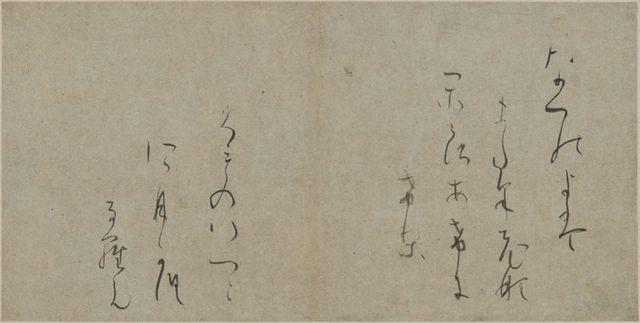
A leaf of the Tsugishikishi, attributed to Ono no Michikaze: poems mounted as a patchwork of decorated papers, a book disassembled into beauty.
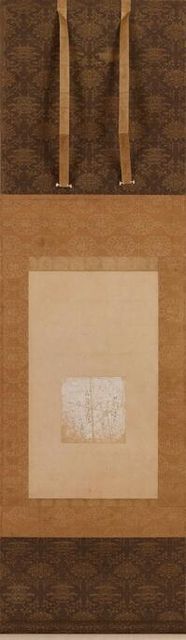
“Autumn Moon”, a leaf of the Sunshōan shikishi, linked to Ki no Tsurayuki, editor of the Kokinshū itself. The trail ends with the anthologist's own hand — or the hand tradition gives him.
Calligraphy & Books is the catalogue's largest category and its National Treasure densest. The hub introduction explains the fragment culture — the “-gire” leaves — that this trail samples.