Important Cultural Property
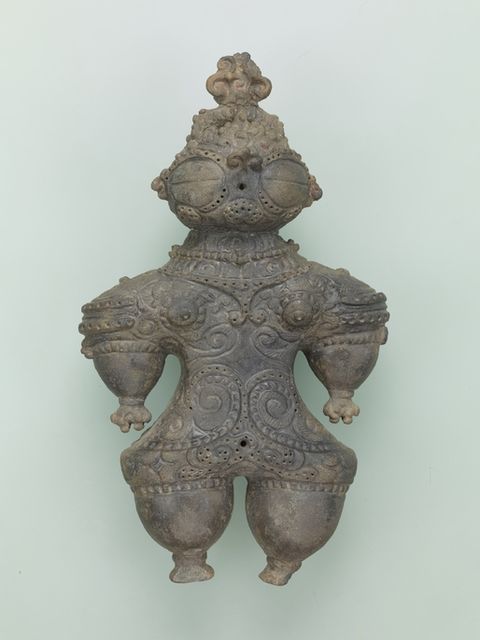
Clay Figurine ("Dogū") with Goggle-Like Eyes
遮光器土偶
Archaeological Objects · Jōmon, 1000–400 BCETNM
This is the only trail on the site that is also a complete hub: the catalogue holds exactly six Jōmon works, and all six are stops. Ten thousand years of prehistoric Japan are represented here by a handful of fired clay — which makes each object count double, and makes the shelf's smallness part of the story. The national collections grew around temples and courts; prehistory arrived late, and thin.
The goggle-eyed dogū: a clay figurine whose snow-goggle eyes made it the face of the Jōmon period. This example carries the catalogue's full editorial treatment.
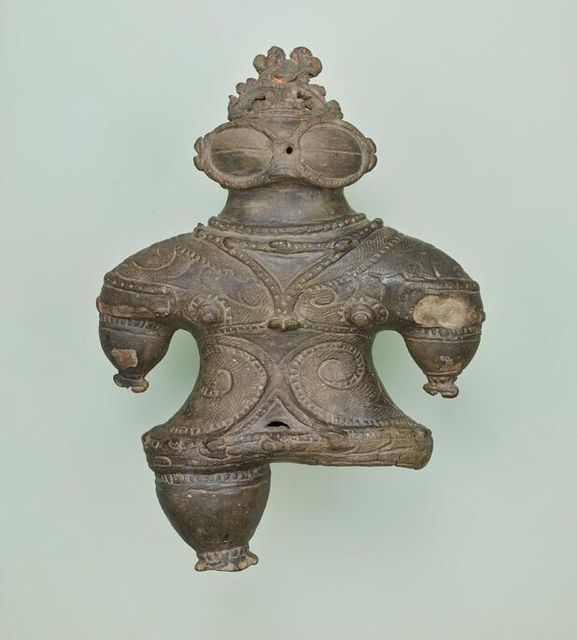
A second goggle-eyed dogū. Two of the six works on this shelf are the same mysterious type — repetition is evidence: whatever dogū were for, they were made again and again.
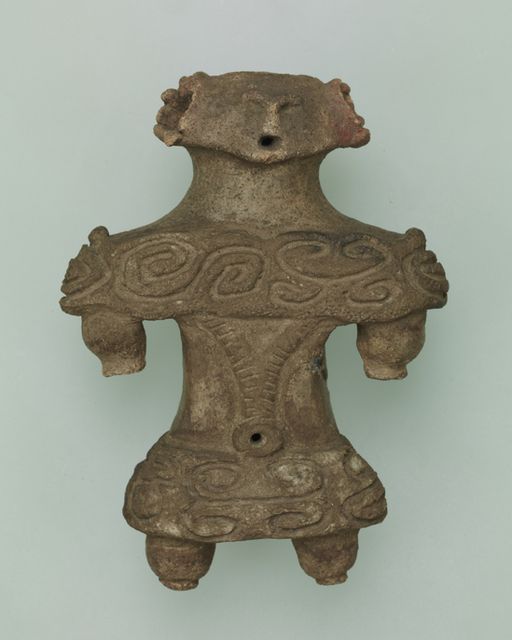
A dogū of a plainer kind: the type without the famous eyes, a reminder that the icon is the exception, not the rule.
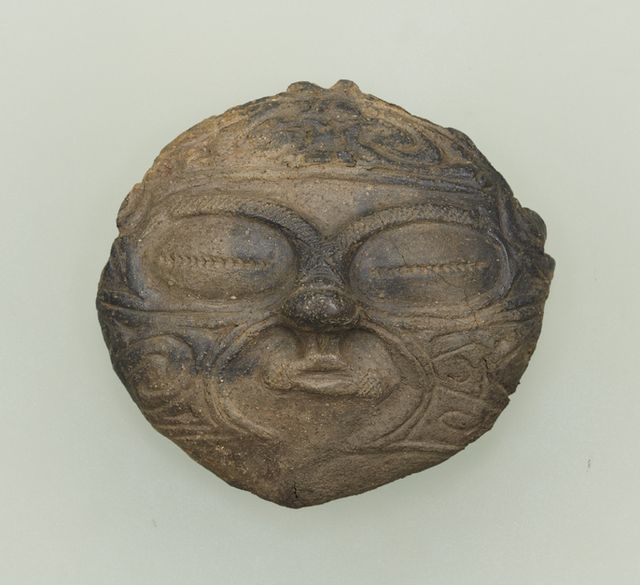
A clay mask (domen). Faces again — the Jōmon imagination, as this shelf preserves it, is a meditation on the human face and body.
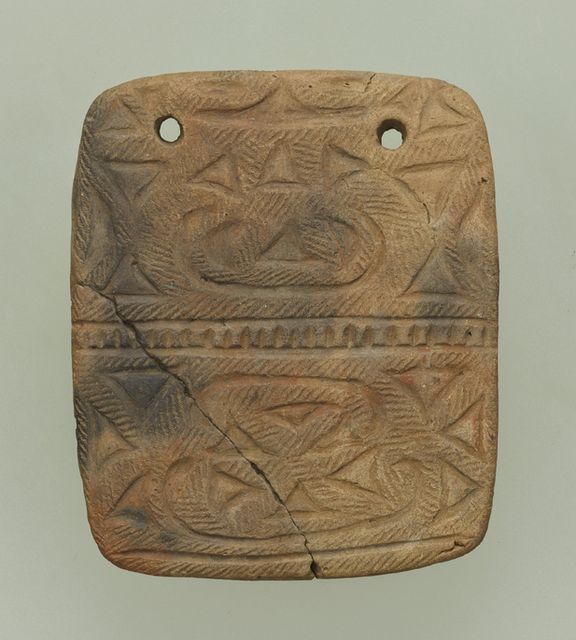
A clay tablet (doban): flat, marked, unexplained. Not every catalogue entry resolves into a story; the record keeps the mystery labelled.
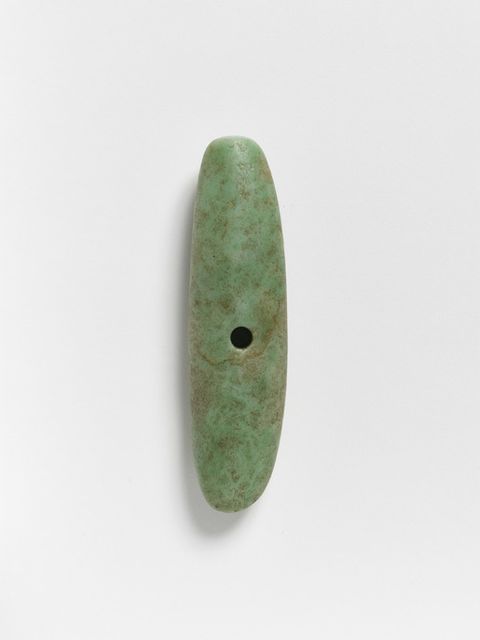
A great bead (taishu), the shelf's only stone and its only Kyushu-held work: Jōmon ornament at a scale meant to be seen.
Six works, one trail, nothing left over. From here the catalogue's story jumps to the Yayoi hub — bronze and rice arrive, and the object count begins its long climb.