National Treasure

Bell ("Dōtaku")
扁平鈕式銅鐸
Archaeological Objects · Yayoi, 200–1 BCETNM
Home › Browse › Archaeological Objects › Jōmon period › Mask

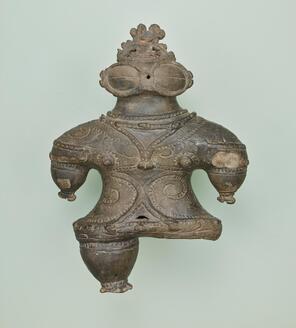
Clay masks first appeared in the mid-Jomon period. Many clay masks dating from the late to the final Jomon period have been found in northern and eastern Japan. This particular type of mask was prevalent in north-eastern Japan during the final Jomon period. The large eyes resemble those found on dogu figurines with goggle-shaped eyes. The spiral-shaped 'irikumimon' pattern on the forehead and cheeks is also reminiscent of the patterns on the bodies of thosedogu figurines. However, the protruding round nose and the clearly-defined lips may represent the features of the wearer. At around ten centimeters in length, though, this mask seems too small to cover a face.
There are also no holes to thread string through, while the rear side of the mask is essentially flat, so it could not have been attached to the face. It is thought instead that the masks were held in the hand and placed against the forehead during rituals. Dogu figurines and stone rods are the most widely-known types of ritual instruments from the Jomon period, but as this mask reveals, the Jomon folk actually used a wide range of tools imbued with a rich variety of prayers. Clay masks were likely used during rituals. This mask has no holes for strings and its back side is flat, suggesting it was not worn on the face, but rather held by hand or other means.
— Museum description: Tokyo National Museum (CC BY 4.0), via ColBase / Japan Search.