National Treasure
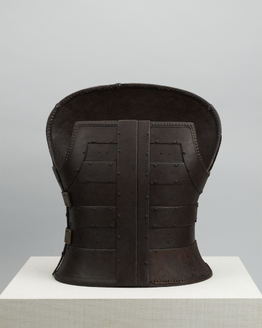
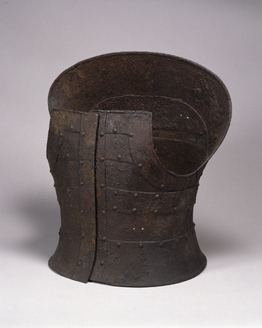
Armor ("Tankō") with Horizontal Plates Joined with Leather
横矧板革綴短甲
Archaeological Objects · Kofun, 401–600TNM
Home › Browse › Archaeological Objects › Kofun period › Gilt Bronze Crown
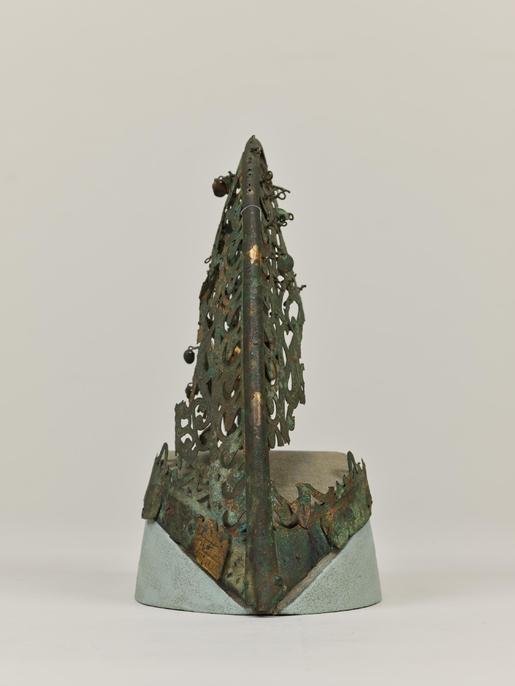
This crown was excavated from the Eta Funayama Tumulus, a burial mound made of heaped earth in Kumamoto Prefecture. It is a grave good buried with the dead. It is made of gilt bronze, and its original gold color can still be seen in places. There are several holes in its peaked rim because small, round, scale-like ornaments once hung from them on chains. These ornaments would sway when the person who wore the crown moved, glittering and making faint sounds. It would have drawn attention in a silent ritual space. Some speculate that the fretwork represents a design of dragons or vines transformed into a repeating pattern, but the details are unknown. Similar crowns have also been discovered in tumuli of Baekje, a kingdom that existed in the southwest of the Korean Peninsula during the same period. The Eta Funayama Tumulus is a keyhole-shaped tumulus located on the middle reaches of the Kikuchi River in Kumamoto Prefecture. It is thought to have been constructed sometime between the second half of the 5th century and the early 6th century.
Numerous opulent grave goods have been discovered inside it, including a large sword with a silver-inlaid inscription, which indicates a connection to the rulers of Yamato. Given both how powerful the occupant of this tumulus must have been and the location of the tumulus in the Kikuchi River Basin, it is thought that the occupant of the tumulus may have unified the maritime military and naval forces on the Ariake and Yatsushiro Seas at that time. A portion of their grave goods, including this crown, may indicate ties to Baekje backed by naval power. Exchange between the Yamato authorities and Baekje became active at a slightly later period, in the second half of the 6th century, after the introduction of Buddhism. These priceless artifacts show that powerful regional clans were already in contact with powerful figures in Baekje without relying on the Yamato authorities as an intermediary before that period.
— Museum description: Tokyo National Museum (CC BY 4.0), via ColBase / Japan Search.