Important Cultural Property

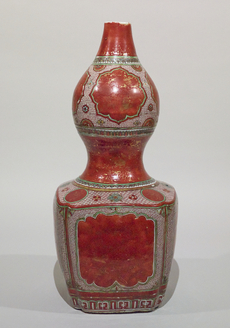
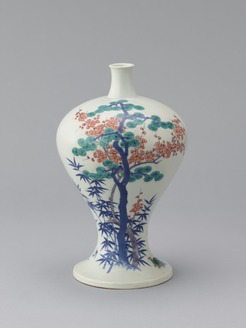
Jar for Tea Leaves with the Moon and Plum Blossoms
色絵月梅図茶壺
Ceramics · Edo, 17th centuryTNM
Home › Browse › Ceramics › Edo period › Water Jar with Peonies
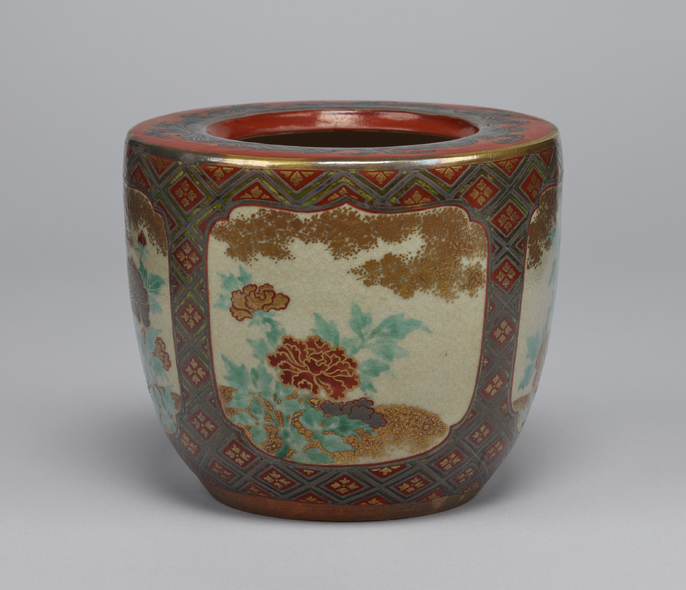
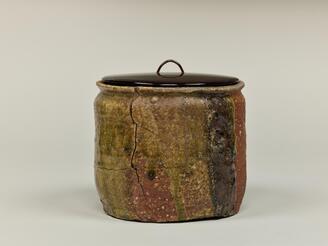
Water jars are used during the tea ceremony to store the water needed to fill kettles or to clean tea bowls and whisks. They stand alongside tea bowls and the tea kettle as the most important components of the tea ceremony. Nonomura Ninsei was a master potter who operated a kiln close to Ninnaji Temple in Kyoto during the Edo period, around the middle of the 17th century. He is known as the man who perfected 'kyo-yaki,' a type of pottery from Kyoto decorated with vivid coloring and picturesque brushwork. This water jar has a beautifully well-proportioned shape. The sides feature peonies and clouds drawn in four window frames. This is a work of striking contrasts, including softly drawn pictures and geometrical designs, dark and light hues, and gold and silver colors.
The use of gold and silver requires a particularly high level of skill, and Ninsei is said to have reflected deeply about their usage. The results of these reflections are on clear display in this work. The characters for 'Ninsei' are also inscribed on the base of the jar. An elite samurai clan known as the Kyōgoku reportedly ordered this ceramic jar from the master potter Ninsei in the 1600s. They used it to store fresh water during tea gatherings. Despite its humble role, the jar features an intricate design illustrating Ninsei's mastery of brush painting and gold-and-silver decoration.
— Museum description: Tokyo National Museum (CC BY 4.0), via ColBase / Japan Search.