National Treasure

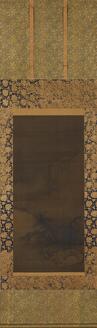
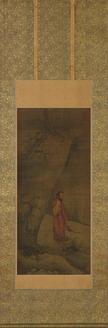
The Eccentrics Hanshan and Shide (From a Scroll of Zen Paintings)
寒山拾得図(禅機図断簡)
Paintings · Nanbokuchō, 14th centuryTNM
Home › Browse › Paintings › Nanbokuchō period › The Illustrated Tale of the Earth Spider (Tsuchigumo)

The illustrated scroll portrays the slaying of a monstrous spider by the Heian-period warrior Minamoto no Raiko and his vassal Watanabe no Tsuna. In a rundown house in the northern part of Kyoto city, monsters appear one after another to drive away Raiko and his party. The monsters are infused with a sense of individuality and a somewhat comical air. The story unfurls across the scroll from right to left. The end of the scroll shows the spider being put to the sword and the house being set alight. Let's take a closer look at the characters appearing here. Two men are shown slaying the giant spider. Next to them, two more men are setting fire to the house. Both pairs are wearing the same garments, so we are actually seeing the same two men at two different points in time. The artist has portrayed the passage of time by showing the same characters at successive points within a single scene.
This narrative flow from right to left is a characteristic feature of illustrated scrolls. The interiors of the rooms and the panel paintings there are also worthy of note. The artist has meticulously captured the details, from the lines seemingly drawn by ruler to the sliding door painting of pines and plovers on a sandy beach. These details suggest the scroll was drawn by a master painter of the Kamakura period. The depictions of the rooms also give us a valuable insight into how the residences of the nobility must have looked. One day, the samurai Minamoto no Raikō finds a skull flying through the air. Together with Watanabe no Tsuna, he follows it to an abandoned house full of demons. They eventually encounter a giant demon, and after they kill it, it reveals itself to be the demonic earth spider, Tsuchigumo. Their heroic tale is illustrated and narrated in this work.
— Museum description: Tokyo National Museum (CC BY 4.0), via ColBase / Japan Search.