National Treasure
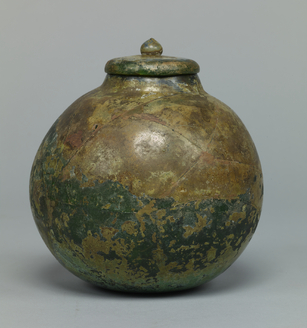
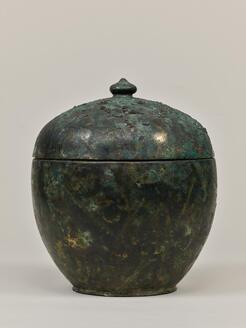
Cinerary Urn
瑠璃骨壺
Archaeological Objects · Asuka, 707TNM
Home › Browse › Archaeological Objects › Heian period › Sutra Case
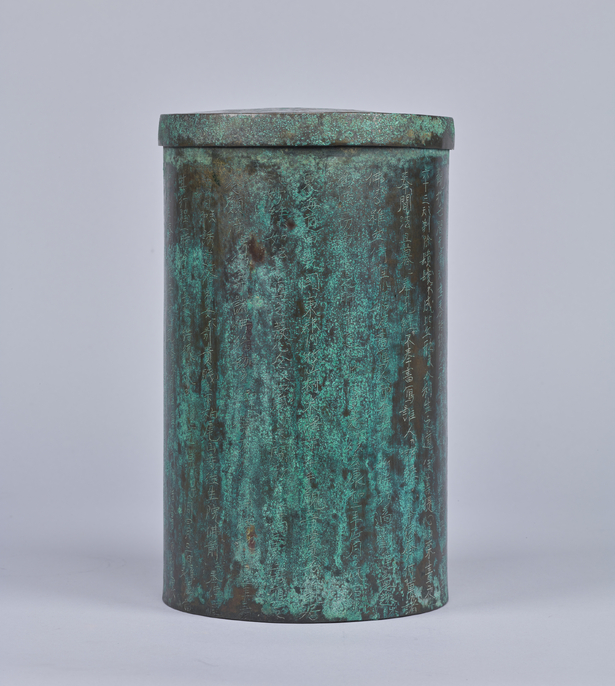
This artifact has the oldest inscription of any sutra case discovered in eastern Japan. The lengthy inscription consists of 783 characters in [hiragana] and [kanji]. This artifact has the oldest inscription of any sutra case discovered in eastern Japan. The lengthy inscription consists of 783 characters in [hiragana] and [kanji]. This is a cylindrical case used for storing Buddhist sutras. It is inscribed with an abundance of characters. They number 783 in total and even reach to the surface of the lid. They recount how a priest named Jakuen transcribed a sutra over a three-year period before burying it in the ground. This case was stored away carefully inside a larger container. The case probably housed several paper sutra scrolls. After many long years underground, though, all that remains of these scrolls are fragments of the wooden axis. So why were such valuable sutras buried in the earth? The answer lies with mappo, a belief that spread throughout Japan from the Heian period.
Mappo refers to an age when Buddhist law degenerates and chaos sweeps the world. This era was forecast to begin in the 2000th year after the death of Sakyamuni, the historical Buddha. However, it was also believed that Buddhism would flourish again 5.67 billion years later. In other words, this container was a kind of time capsule, designed to protect the teachings of Sakyamuni and deliver them to a distant future. Places where sutras were interred are known as sutra mounds. These mounds first appeared in Japan at the end of the 10th century. Their shapes or the objects they housed differed according to the social status of the person burying the sutra, for instance, or on whether the mounds were built in ancient times, medieval times, or the early modern period. The appreciation of this case can be enhanced by comparing it with articles excavated from other sutra mounds created at different times in history.
— Museum description: Tokyo National Museum (CC BY 4.0), via ColBase / Japan Search.