National Treasure

Cinerary Urn
瑠璃骨壺
Archaeological Objects · Asuka, 707TNM
Home › Browse › Archaeological Objects › Asuka period › Epitaph of Fumi no Nemaro
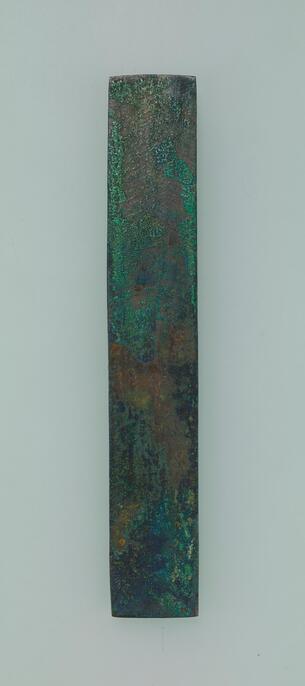
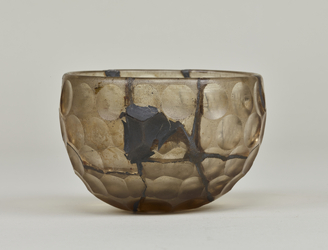
This is an Asuka-period bronze plaque with an engraved epitaph. Its discovery dates back to the Edo period. It was found inside a gilt-bronze box by a farmer plowing a field in Uda City in present-day Nara Prefecture. It was discovered alongside a gilt-bronze pot that contained a glass urn filled with cremated ashes. From the inscription on the epitaph, we know these are the remains of Fumi no Nemaro, who died in the ninth month of Keiun 4, or 707. Fumi no Nemaro came from a migrant clan that hailed from the Korean Peninsula and appears in two ancient history books, the Chronicles of Japan and the Continued Chronicles of Japan. During the Jinshin Rebellion of 672, he fought on the side of Prince Oama, who later became Emperor Tenmu.
His valorous service earned him promotion to the prestigious position of Junior Fourth Rank, Lower Grade. The custom of cremation was transmitted to Japan along with Buddhism in the middle of the 6th century. Perhaps this custom caught on quickly amongst migrant clans with more advanced technologies and ways of thinking. Only 16 similar epitaphs have been found in Japan. As one of the earliest such epitaphs, this is an extremely important historical resource. Fumi no Nemaro's ancestors migrated from what is now China or Korea in ancient times. A glass cinerary urn, which was rare at the time, was also discovered in his grave, attesting to his high status and prestige.
— Museum description: Tokyo National Museum (CC BY 4.0), via ColBase / Japan Search.