National Treasure

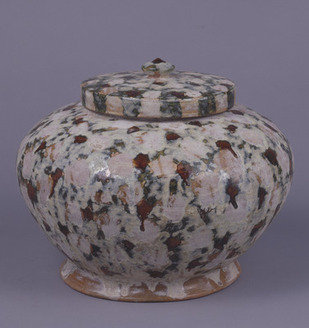
Cinerary Urn
瑠璃骨壺
Archaeological Objects · Asuka, 707TNM
Home › Browse › Archaeological Objects › Nara period › Seal

This is a Nara-period seal. From the top left, the four Chinese characters that read Mikasadan In are carved in two vertical lines within the square border of the seal. When used, the characters would have appeared in mirror-image on the printed surface. They look different from Chinese characters used today because they are written in an ancient Chinese script known as seal script. The knob section features a mark shaped like an upside-down letter ‘T.‘ This indicates that the characters will be printed correctly when the mark is facing the user. The seal was made by pouring a copper alloy into a mold. The large surface is around four centimeters on all sides, with the seal around five centimeters high. It must have felt quite heavy in the hand. The word Mikasa refers to Mikasa-gun in Chikuzen Province, an area located in present-day Fukuoka prefecture. Under the Ritsuryo legal codes of the Nara period, army corps were stationed at various places across the nation.
The Mikasa-dan was a corps stationed in Chikuzen, with this seal probably used for official Mikasa-dan documents. This probably explains why the seal has such a weighty presence. It is said four army corps were stationed in Chikuzen, including the Mikasa-dan. Tokyo National Museum is also home to the Ongadan In, the seal of the Onga-dan, another one of these corps. The two seals are similar in size and design. They are valuable for the study of written culture and also for the historical evidence they provide for the existence of military corps at that time. The use of official seals began in the Nara period (710–794) under the influence of Sui and Tang China. Seals were made for various institutions, and this particular seal belonged to a military corps.
— Museum description: Tokyo National Museum (CC BY 4.0), via ColBase / Japan Search.