National Treasure

Cinerary Urn
瑠璃骨壺
Archaeological Objects · Asuka, 707TNM
Home › Browse › Archaeological Objects › Nara period › Lidded Jar

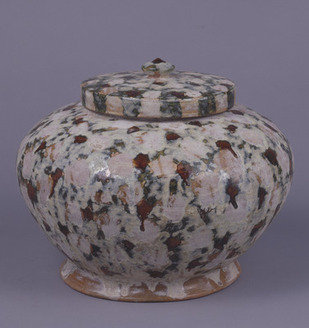
This jar, or cinerary urn, was likely used for a person of high social standing. It is one of the earliest examples of finely crafted three-color glazed ware from the Nara period (710–794). This colorful pottery vessel with a strikingly plump shape is actually a cinerary urn excavated from a Nara-period grave. The splashes of green, brown, and white are glazes applied to the vessel's surface. The three-color glaze technique originated in China, where it was known as Tang Sancai. It was also highly appreciated and the subject of much imitation in Japan too. This work was produced very soon after the Tang Sancai technique came to Japan. The colors were originally more vivid and shiny, but they subsequently faded during the long years buried underground. The lid is skillfully crafted to fit perfectly on the body. It features a knob shaped like a sacred Buddhist gem known as a hoju.
This emergence of these urns also signals a shift in Japan from burial to cremation and from large tumuli to small graves. In 646, an imperial ordinance regulated the size of tombs according to the status of the deceased person. As a result, large tumuli gradually disappeared. This trend was given added impetus by the spread of cremation after Buddhism's arrival on Japan's shores. It seems the practice of cremation was adopted particularly quickly by the nobility and bureaucrats living around Heijo-kyo, or modern-day Nara, which was the seat of political power at the time. It is thought this urn was used to house the remains of one of these high-ranking figures. This is an example of a three-color glaze vessel made in Japan, but three-color glaze pottery from China is also on display in this museum's Toyokan, or Asian Gallery.
— Museum description: Tokyo National Museum (CC BY 4.0), via ColBase / Japan Search.