National Treasure

Hue of the Water, Light on the Peaks
山水図(水色巒光図)
Paintings · Muromachi, 15th centuryNara NM
Home › Browse › Paintings › Nanbokuchō period › Nyoirin Kannon (Cintāmaṇicakra)
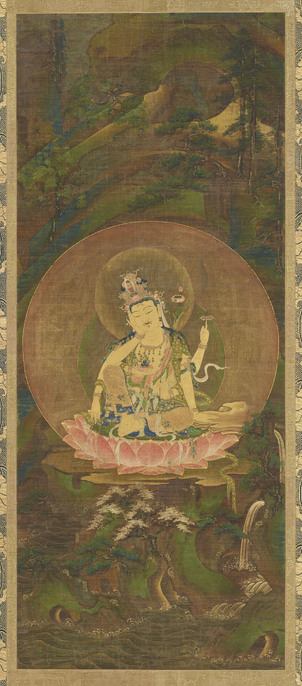
The abode of the bodhisattva Kannon (Skt. Avalokiteśvara) is a mountainous island, Mount Fudaraku (Skt. Potalaka). Here, an emanation of Kannon appears seated within this abode, the six-armed deity Nyoirin Kannon (Skt. Cintāmaṇicakra). The six arms are believed to symbolize the bodhisattva’s power to rescue sentient beings from each of the Six Realms, the worlds into which one can be reborn after death. Mount Fudaraku is replete with pine trees and cherry blossoms: a landscape of familiar beauty. This is a common figure of Nyoirin-kannon (Cintāmaṇicakra) with a golden body and six arms as introduced in the Kanjizai Nyoirin-bosatsu Yuga-hō-yō sutra (Guanzizai Ruyilun-pusa Yuqie-fayao). The posture of the image—touching the cheek with its first right hand is based on the iconography of the Kannon-in section of the Taizō-kai (Garbhadhātu or womb) Mandala. This Nyoirin-kannon is sitting with one knee drawn up on the elegant and graceful lotus seat which is decorated with gold lines. The whole figure is placed within the circumference of the disk of the moon.
The body is painted in gold and outlined in red. The garment and ornaments are beautifully colored, and several kinds of designs such as Tatewaku, Kōshi-checkered pattern, and Manji-tsunagi pattern were added in cut-gold foil rendering, which contributes to the gorgeousness of this scroll. This gorgeous decoration is one of the characteristics of this painting. In the background, the Sanctuary of Mt. Fudaraku (Potalaka), which is rising up from the sea, is depicted together with seasonal objects in the manner of the Yamato-e painting style. Mountain folds were described with soft brush strokes in ink, and green was added between the ink lines. Gold pigment was also added at some places. Tree trunks and leaves of pine trees and cherry trees on the mountain were painted colorfully. Cherry blossoms are painted on top-view and colored white. It is unconventional to adopt such grand natural views to Buddhist paintings.
— Museum description: Nara National Museum (CC BY 4.0), via ColBase / Japan Search.


