Important Cultural Property

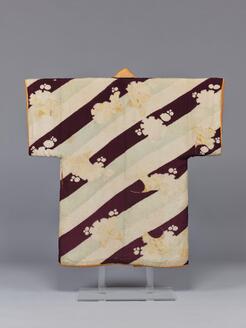
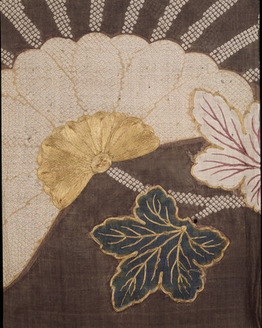
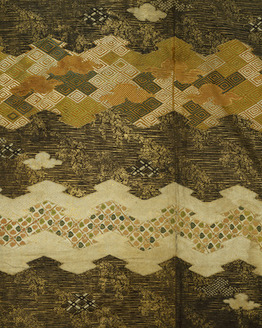
Kimono (Kosode) with Autumn Grasses
小袖 白綾地秋草模様
Textiles · Edo, 18th centuryTNM
Home › Browse › Textiles › Edo period › Long-Sleeved Kimono (Furisode) with Falcons on Standing Screens with Plum Trees

Garments called furisode are distinguished by their long sleeves. This furisode has a pale yellow silk ground with designs of falcons perched on standing screens. A single magnificent plum tree twists sinuously across the surfaces of the screens. The screens and falcons are depicted using a starch-resist dyeing method called yuzen, which is unique to Japan. This technique allows for patterns to be laid out freely as though one were painting on a canvas. Take a look at the wood grain of the screens and the texture of the falcons' feathers, both of which are expressed with thin white lines. These lines were created by applying lines of starch paste onto the fabric. When the dye was applied, it only seeped into the sections that were not covered in the paste, leaving the lines white. In an extremely meticulous process, the dyes were applied with a brush for maximum control and to assure that they did not seep beyond the sections they were meant to color.
Furthermore, the plum blossoms are embroidered in crimson and gold thread, while the purple patches on the ground were made with another dyeing technique called bakudan zome, or bomb dyeing. These techniques combine with the bold composition and rich color to create a truly extravagant furisode garment. This kimono was likely worn by a young man. The design of falcons perched on screens, rendered with delicate, vivid dyes, remind one of a painting. The blurred purple patches were created by a tie-dyeing technique that was widely used around the first half of the 1700s. It was created when the [yūzen] dyeing technique reached its peak.
— Museum description: Tokyo National Museum (CC BY 4.0), via ColBase / Japan Search.