Important Cultural Property

Kimono (Kosode) with Noshi Strips and Wisterias
小袖 白黒紅染分綸子地熨斗藤模様
Textiles · Edo, 17th centuryTNM
Home › Browse › Textiles › Edo period › Kimono (Kosode) with Plants, Cranes, Turtles, and Geometric Patterns

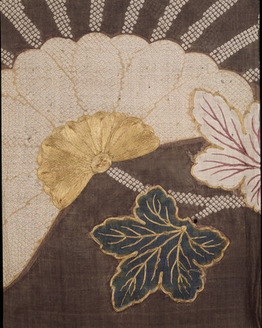
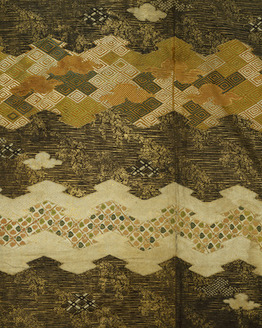
Kosode are predecessors of modern-day Japanese kimono. The name kosode, which means 'small sleeve,' derives from the small wrist openings of the garments. The ground here may look brown, but it is actually a reddish-black color rendered by dyeing the fabric red and then black. Zig-zag patterns, flagstone designs made up of interlocking squares, and diagonal stripes have been rendered using a tie-dying technique that creates a pattern resembling the spotted fur of a young deer. With this technique, small cloth clumps are tied together with thread and dyed one by one, with lines and shapes formed by the tiny spots.
Other designs have also been embroidered using gold and silk threads. Though faded now, the colored portion of the black ground was once a haze pattern rendered in gold foil. It must have looked spectacular when covered in tie-dyed motifs, embroidery patterns and a golden haze. At the start of the Edo period, this kind of design, where patterns fill every space, was called 'jinashi,' or 'no ground.' It is often seen on garments used for special occasions. It features a number of celebratory motifs, including a wave pattern, phoenixes, cranes, turtles and pine trees.
— Museum description: Tokyo National Museum (CC BY 4.0), via ColBase / Japan Search.