Important Cultural Property

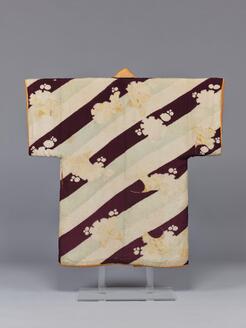
Kimono (Kosode) with Noshi Strips and Wisterias
小袖 白黒紅染分綸子地熨斗藤模様
Textiles · Edo, 17th centuryTNM
Home › Browse › Textiles › Edo period › Kimono (Kosode) with Young Pines, Small Flowers, Deer, and Autumn Leaves

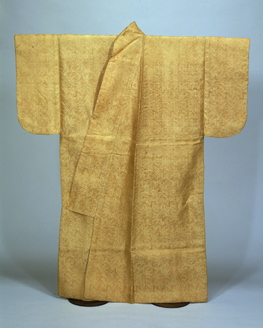
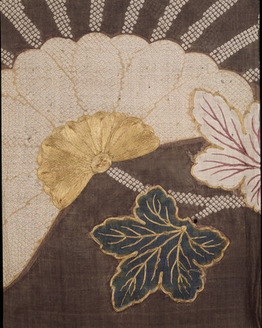
Kosode is the name given to garments with small wrist openings. At first glance, this kosode strikes an audacious tone with its bold design of large diagonals slicing across the cloth. Tie-dyeing is used to divide the garment into wide segments, with the dyed part overlaid with finely-embroidered designs. This style is characteristic of Keicho-era kosode. Intricate motifs are embroidered into the black segments. All this makes a striking impression, but a closer look reveals a more delicate, endearing aspect. One feature of this kosode is its varied seasonal patterns. Young pines are an auspicious symbol of the New Year, for example, while the black and white floral patterns are suggestive of spring.
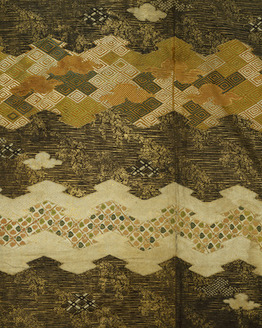
The deer in autumn leaves motif, meanwhile, is a common theme of waka poetry and is also found in the design of Japanese playing cards. This was probably a garment for special occasions, whatever the season. These seasonal motifs and the geometrical patterns based on waka poetry are distinctive features of Japanese design. This kosode can be enjoyed from different perspectives, both up close and from a distance. Small autumn leaves and adorable deer decorate this colorful kimono. Such a design was based on a [waka] poem about Mount Mikasa in Nara. Notably, the entire surface of the kimono is covered with embroidery and tie-dyeing, making this an example of a groundless kimono.
— Museum description: Tokyo National Museum (CC BY 4.0), via ColBase / Japan Search.