National Treasure
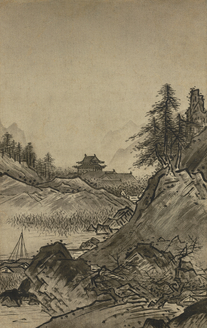
Autumn and Winter Landscapes
秋冬山水図
Paintings · Muromachi, 15th centuryTNM
Home › Browse › Paintings › Muromachi period › Landscape of the Four Seasons
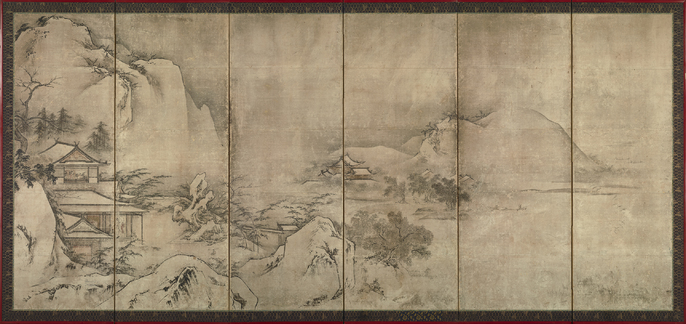
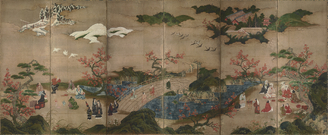
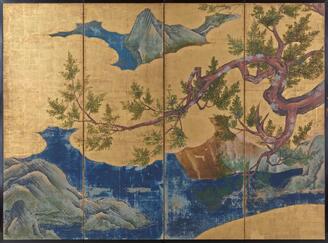
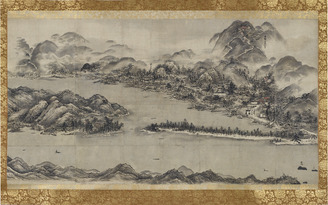
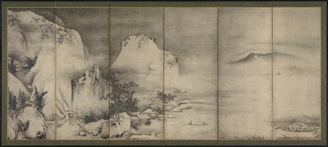
This folding screen painting beautifully depicts a landscape during spring, summer, autumn and winter. The seasons flow from right to left across a matching pair of folding screens. Let's take a look at the spring scene on the screen to your right. Look to the lower-right of the panel on the far right. Three travelers lead some donkeys along a path. Before them stands a peach blossom tree in full bloom. On the second panel, the melted snow has created a powerful flow of water. If we cross the small bridge and travel along the thin path under the lee of the rock, we come to cave where a hooded man sits. A glance further up reveals fresh verdure swaying in the wind. In a palatial building, several people gaze at the scenery spreading out before them. In the third panel, we see a simple hut standing close to the water. The season is summer and a cool breeze seems to blow over the water's surface.
We can also see a boat heading off somewhere. The far left panel of the left-hand screen depicts scenes of autumn turning into winter, from migrating geese to snowy landscapes. Folding screens were used to partition rooms or keep out draughts. As such, they were used and appreciated throughout the course of daily life. With these screens, the viewer could experience nature's seasons from the comfort of his or her own home. It must be nice to relax, look at the screens and imagine traveling through the landscapes yourself. This landscape depicts the passage of the four seasons from right to left. It was created by borrowing elements from several imported Chinese paintings and arranging them into a single composition. Its alleged creator, Shūbun, was a monk-painter in Kyoto. He was hugely influential, but no surviving painting can be positively attributed to him.
— Museum description: Tokyo National Museum (CC BY 4.0), via ColBase / Japan Search.