National Treasure

Hue of the Water, Light on the Peaks
山水図(水色巒光図)
Paintings · Muromachi, 15th centuryNara NM
Home › Browse › Paintings › Nanbokuchō period › Kokūzō (Ākāśagarbha)
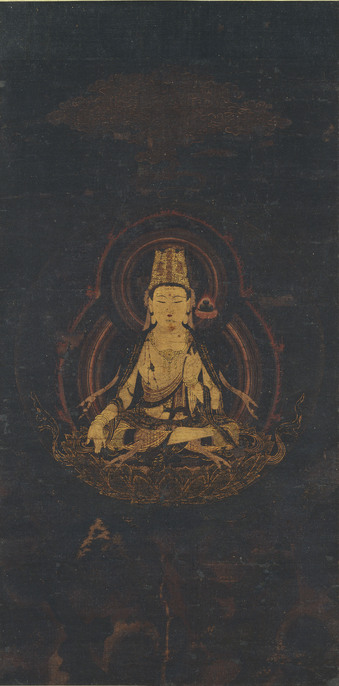
{i=>[maṇi], content=>[The bodhisattva Kokūzō (Skt. Ākāśagarbha) appears within a disc that is set above a landscape, holding a lotus flower in its left hand upon which rests precious jewels (Skt. , ). Its right palm is open, hanging down and facing out; this corresponds to the iconography for the principal object of worship in the Gumonjihō ritual, which is performed to enhance memory. The painting comes from the collection of the Tendai temple Enman’in in Otsu City, Shiga prefecture.]} The virtue of this Buddhist deity was thought to be as limitless as the sky (kokū). The seated figure in this picture is wearing a crown with five small Buddha images and has a golden body. The figure holds a lotus stem with a magic jewel on it in its left hand and his right hand is stretched downwards making the finger sign Yogan-in.
This pose corresponds with the definition of the principal image for the Gumonji-hō ritual which is performed for the attainment of a better memory. But the style of the figure in this painting is different from the original Buddhist figure for that ritual. Probably the image of this Kokuzō-bosatsu (Ákāśagarbha) was painted not for the purpose of attaining a better memory but for some other purposes such as good fortune. Unique objects such as a canopy-like cloud over the head of Kokuzō-bosatsu and the mountains below the figure, where plum and cherry trees and a waterfall had been added, are notable. The intellectual look of the figure and the technique of cut-gold foil used for several decorations on the costume indicate that this painting was made during the late Kamakura period.
— Museum description: Nara National Museum (CC BY 4.0), via ColBase / Japan Search.


