National Treasure

Sūtra box with design of lotus flowers
蓮唐草蒔絵経箱
Crafts · Heian, 12th centuryNara NM
Home › Browse › Crafts › Muromachi period › Hangign lantern
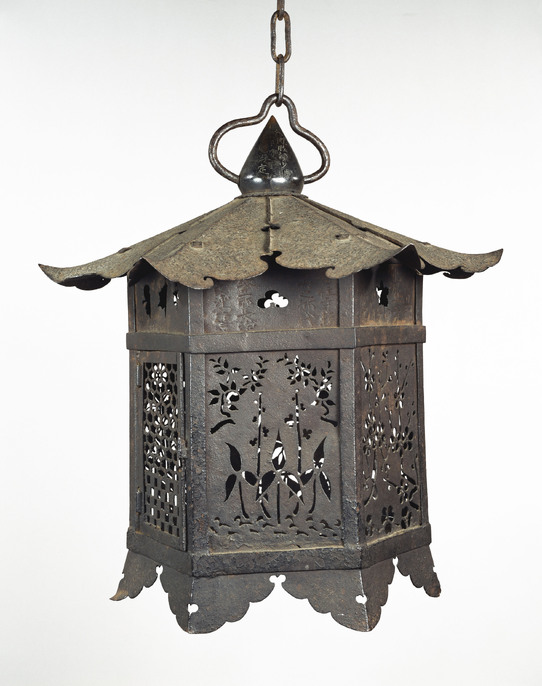
{i=>[Kongōshu Bosatsu], content=>[This hexagonal lantern is made of forged iron. The panels of the chamber for the flame are decorated with Vegetal motifs and flowers in openwork. Can you imagine the beauty of this lantern alight with flickering flames? According to the inscription, it was dedicated to the Vajrapāṇi (J., ) enshrined in a hall of Nyohō-ji Temple located in Nishiaizu, Fukushima.]} Lanterns are used to give offerings of light to Shinto kami and Buddhist deities. This one is designed to hang down, and it is made from forged iron. The side panels feature traditional motifs done in openwork, like a fence with chrysanthemums, pine and bamboo, and plum blossoms. The lantern has been designed to offer a subtle light from the flame within. According to its inscription, it was dedicated to the Shukongōshin (Skt. Vajrapāṇi) enshrined at Nyohōji Temple in Fukushima prefecture. {br=>[[]], content=>[This hexagonal iron lantern had been kept in Nyohō-ji temple in Aizu in Fukushima prefecture. The roof and the legs are made in the shape of leaves with holes. Two diametrically opposite sides out of six sides of the lantern-body are crafted as doors.
One of the doors is decorated with open-work checkered and arare (hail) patterns, whereas the decoration of the other door consists of open-work net and arare patterns. The four side-panels of the lantern are decorated with designs of small chrysanthemums, pine trees, bamboo stalks, a combination of cherry blossoms and clover leaves, and combination of omodaka (arrowhead) plant and tachibana-oranges rendered in open-work. An inscription is engraved into each transom panel. A bronze magic jewel is placed on a chrysanthemum-shaped seat at the top of the roof, and an iron ring is connected to the magic jewel, and in turn an iron chain is connected to the ring., The size of the roof and legs is rather small compared with the total height of this lantern, and each side-panel is divided into two sections. These aspects are indicative of the classic style. According to the inscriptions on the transom panels and the bronze magic jewel on the top, this hanging lantern was donated to the the Shūkongō-jin (guardian deity) in 1564.]}
— Museum description: Nara National Museum (CC BY 4.0), via ColBase / Japan Search.


