National Treasure
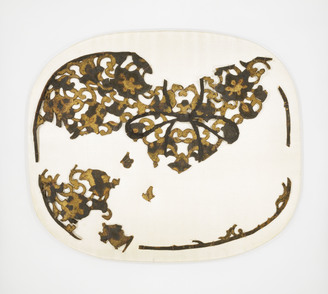
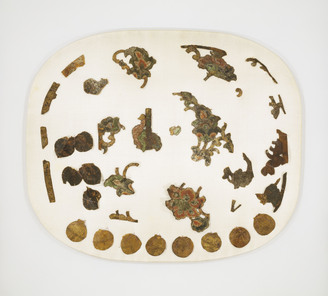
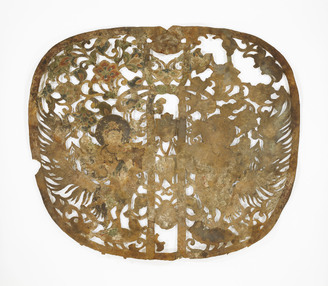
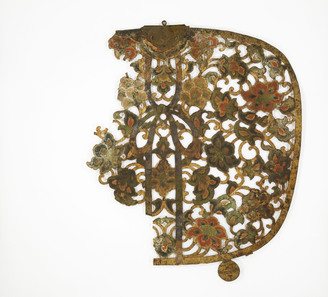
Keman (Pendant ornament in Buddhist sanctuary), Fragments
牛皮華鬘(残欠)
Crafts · Heian, 11th centuryNara NM
Home › Browse › Crafts › Heian period › Keman (Pendant ornament in Buddhist sanctuary)
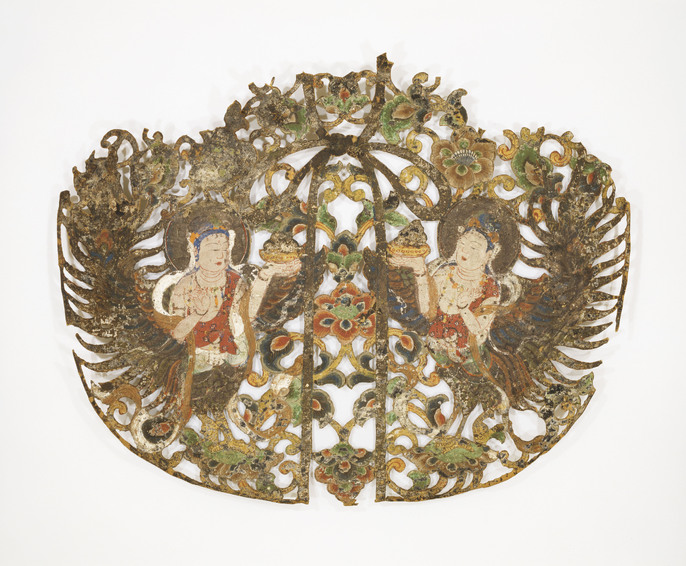
{i=>[Keman, vyūha, alaṃkāra, shōgon, keman, karyōbinga], content=>[ are objects of Buddhist adornment (Skt. , and , ; J. , ) that are hung from pillars and beams within temple halls. The designs of the leather , seen here are cut out and expressed in radiant colors. They include fantastical flowers, floral arabesque designs, and , (Skt. Kalaviṅka), the birds with human faces who dwell in the Pure Land paradise. These pendants come from Tōji Temple in Kyoto.]} {br=>[[], []], content=>[Keman is an interior ornament to be hung in temples. It symbolizes a garland of flowers, which used to be given to noble people in India. Many of the keman have garland designs for this reason., The thirteen keman-ornaments introduced in this article had been kept in Tō-ji temple in Kyoto. each of them is made of cow-hide onto which images were painted. The design of one of the keman consists of a pair of sacred birds, Karyōbinga (Kalavinka), and its background is decorated with hōsōge flowers.
Another keman is decorated only with hōsōge flowers. In both of the designs lines flow pleasantly. The coloring method shows the same characteristics as the method used for Buddhist painting in the late Heian period. The keman with the design of Karyōbinga is decorated not only with colors but also with gold, which makes it even more gorgeous., According to the record of Buddhist services held in the pagoda of Tō-ji temple, a \keman-dai\ was used during the Buddhist services held for celebrating the foundation of the five-storied pagoda in 1086. The Documents on Newly-made Buddhist Implements of Tō-ji temple contains a record which says that eleven keman were made in 1101. The extant keman-ornaments can be classified into several groups with respect to the composition of designs and manufacturing techniques. Some of them may be the very items recorded in the above-mentioned documents.]}
— Museum description: Nara National Museum (CC BY 4.0), via ColBase / Japan Search.