National Treasure

Blade for a Dagger ("Tantō"), Named "Atsushi Tōshirō”
短刀(名物 厚藤四郎)
Swords & Armour · Kamakura, 13th centuryTNM
Home › Browse › Swords & Armour › Kamakura period › Blade for a Long Sword ("Tachi"), Named "Ima Aranami"

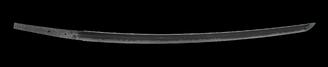
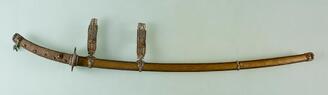
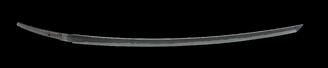
The curve of this magnificent tachi sword is deepest just above the tang. The back portion of a blade that is inserted into the hilt of a sword. This long sword was created by the Ichimonji school of Japanese swordsmiths, which flourished in the southeast of present-day Okayama Prefecture during the 13th century. Some swords by this school are inscribed with the name of the swordsmith who forged them, while others, such as this one, are inscribed only with the character “一” ichi, meaning “one”. Swords by the Ichimonji school are distinguished by the gleaming pattern, called a hamon, that separates the dark and light portions of the blade.
The hamon of Ichimonji-school blades have complex shapes resembling rows of clove buds in a variety of sizes. This tachi has been given the name Ima’aranami, meaning “raging billows,” presumably because its hamon gives an impression of motion reminiscent of stormy seas. This blade’s tang (the part to which the grip is attached) is engraved with a vertical line in between the two holes. This mark means “number one” and is likely shorthand for “the greatest in the land.” This mark was used by the Ichimonji school, a leading group of swordsmiths who worked in Bizen Province, western Japan, around the 1200s.
— Museum description: Tokyo National Museum (CC BY 4.0), via ColBase / Japan Search.