National Treasure

Blade for a Dagger ("Tantō"), Named "Atsushi Tōshirō”
短刀(名物 厚藤四郎)
Swords & Armour · Kamakura, 13th centuryTNM
Home › Browse › Swords & Armour › Kamakura period › Blade for a Long Sword (Tachi)

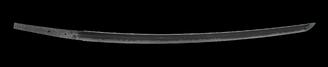
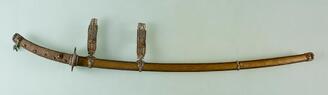
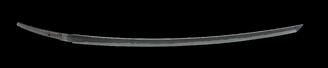
When appreciating Japanese swords, one thing to focus on is the tempering pattern. This is the gleaming line that sits between the black and white sections on the blade edge. Swordsmiths from each region developed their own signature tempering patterns from the mid-13th century onwards. Some move in a straight line, for example, while others have gentle, shallow curves. This tachi sword creates a lively impression with the way the cutting edge varies in thickness and the way its temper pattern manifests different shapes, for instance. A closer look reveals how the uneven tempering pattern resembles a line of different-sized cloves. This type of clove pattern is often seen in swords produced by the Ichimonji school of swordsmiths, which was active in the 13th century in the southern part of modern-day Okayama prefecture.
This sword was owned by the 16th century military commander Toyotomi Hideyoshi. It was later gifted to the 17th century general Takenokoshi Masanobu and it was subsequently passed down through his family. The creator of this blade, Yoshifusa, was a leading member of the Ichimonji school, a prominent group of swordsmiths based in western Japan. After forging this blade, he hardened the steel using his signature tempering technique, which produced an intricate pattern along the cutting edge.
— Museum description: Tokyo National Museum (CC BY 4.0), via ColBase / Japan Search.