National Treasure

Commentary on Vajracchedikā-sūtra, by priest Kūkai
空海筆 金剛般若経開題残巻(三十八行)
Calligraphy & Books · Heian, 9th centuryNara NM
Home › Browse › Calligraphy & Books › Kamakura period › Zappitsu-shū (Collected Notes and Records)
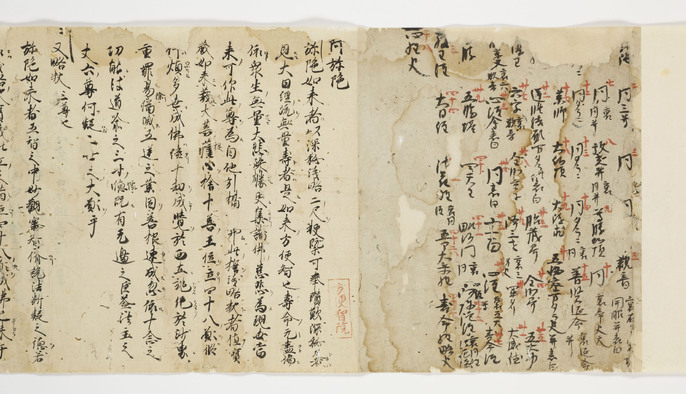
This scroll compiles invocations and euologies used in Buddhist ceremonies largely dating to the latter part of the Heian period (794–1185), many of which are associated with the esoteric rites performed at Tōji Temple. The hyōbyaku is the pronouncement of intention read aloud at the start of Buddhist ceremonies. It provides a sense of the goals behind rituals and the worldview at the time. {i=>[hyōbyaku, hyōbyaku], content=>[This is the , scroll from a compilation of invocations and euologies used in Buddhist ceremonies largely dating to the latter part of the Heian period (794–1185), many of which are associated with the esoteric rites performed at Tōji Temple. The , is the scroll providing information on Buddhist ceremonies, an overview on rituals and what one recites standing in front of icons. It explains the purposes behind various rituals, and in turn provides a sense of the worldview at the time.]} {br=>[[]], content=>[These handscrolls are a collection of notes and records of Buddhist rituals, which include hyōbyaku opening addresses for Buddhist services.
This collection is comprised of the volumes of \Buddha\, \Kanjō-tandoku\, \Kōshi\, \Hyōbyaku-opening addresses\, and \Hyōbyaku and others\. The oldest record of hyōbyaku was for the Fugen Emmei Mishuhō ritual performed in Hōshō-ji temple on June 22, 1099, whereas the latest record is Monkō-hyōbyaku and Taizōgyōhō-hyōbyaku in 1152. It is conceivable that this collection of records was compiled by someone related to Tō-ji temple since many records were concerned with Buddhist rituals in that temple., No colophon is included and each volume was copied by different persons, but judging from the calligraphic style these volumes are thought to have been copied during the mid-Kamakura period. According to the red rectangular seal which reads \Hōbenchi-in\ on the front page of each scroll, these scrolls had been kept in Kōsan-ji temple.]}
— Museum description: Nara National Museum (CC BY 4.0), via ColBase / Japan Search.


