National Treasure
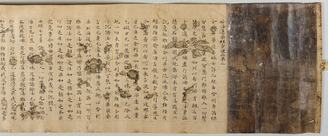
"Expedient Means" Chapter of the "Lotus Sutra" (From Chikubu Island)
法華経 方便品(竹生島経)
Calligraphy & Books · Heian, 11th centuryTNM
Home › Browse › Calligraphy & Books › Heian period › Volume 22 of Qunshu Zhiyao
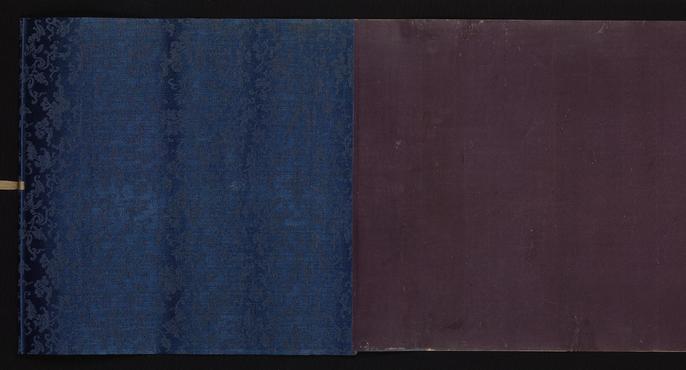
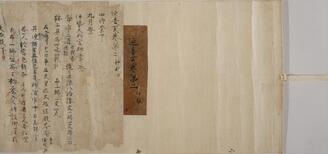
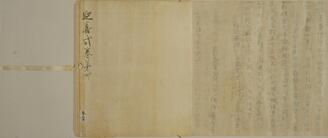
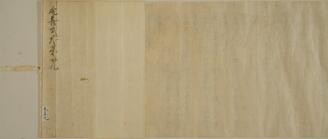
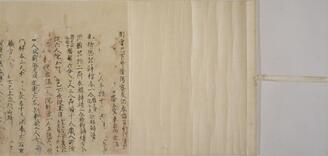
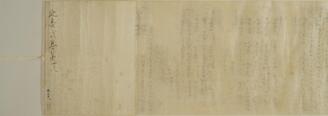
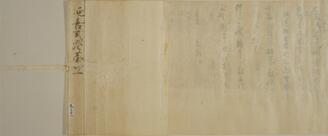
The fifty-volume Gunsho chiyo, or Qunshu zhiyao in Chinese, which translates as “Digest on Statecraft,” was compiled in China in 631 on the orders of Emperor Taizong of the Tang dynasty. A crucial work for understanding Chinese political thought during that period, it was also read and revered within courtly circles in Japan from the early Heian period, which lasted from 794 to 1192. The handscrolls are made of paper dyed in purple, light blue, and brown hues. The paper is ruled with gold guidelines. Several people worked together to copy the text, which is marked by the gentle elegance of its regular, square-style Chinese characters. The text also features annotations and grammatical aids for reading the Chinese, thus making it a valuable historical source for language study. It is unusual for Chinese works to be copied out on colorful Japanese-style paper in this manner, yet the lush coloring and graceful Chinese script create a marvelous harmony that epitomizes the beauty of Heian-period calligraphy.
The fifty-volume [Qunshu Zhiyao] ([Digest on Statecraft]) was compiled in China in 631 by the order of the emperor. A crucial work for understanding Chinese political theory during that period, it was also studied within courtly circles in Japan. The volume on display is likely from the oldest surviving copy of the [Qunshu Zhiyao], which was created in Japan about 1,000 years ago. To make the copy, artisans dyed the paper in multiple colors and added ruled lines in gold pigment. Several scribes worked together to copy the Chinese text in an elegant calligraphic style.
— Museum description: Tokyo National Museum (CC BY 4.0), via ColBase / Japan Search.