National Treasure

Engishiki (Rules and regulations concerning ceremonies and other events)
延喜式 巻十
Calligraphy & Books · Heian, 11th centuryTNM
Home › Browse › Calligraphy & Books › Heian period › "Expedient Means" Chapter of the "Lotus Sutra" (From Chikubu Island)

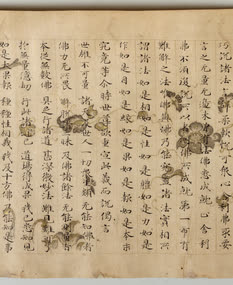
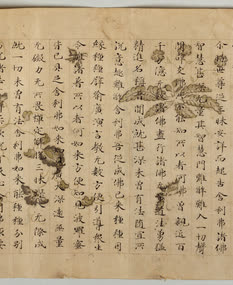
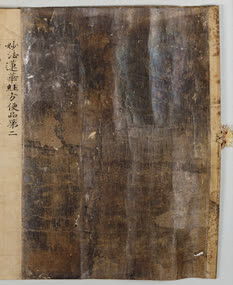
A decorated sutra transcription of exceptional quality from the Heian period (794–1192), this work features a relaxed style of calligraphy over paper with gold borderlines and motifs inspired by nature. This copy of the Lotus Sutra, decorated with beautiful underdrawings of butterflies and flowering plants, is known as the Chikubujima kyo after Lake Biwa's Chikubushima island, where it was originally preserved. The total set is thought to have numbered 8 handscrolls, but only 2 chapters, both of which were from the first scroll, still remain today: the introduction which is kept at Hogan-ji temple on Chikubushima island; and this scroll, which is the Expedient Means chapter. During the late Heian period, people began producing beautifully-decorated sutra copies on ornate writing paper. This was believed to be a meritorious act that would help the practitioner enter paradise upon death.
This sutra was also created for this reason. It is ruled with gold ink and decorated with large gold and silver underdrawings of butterflies, birds, flowering plants, and mushroom-shaped clouds. The silver sections have turned black through oxidization, but they must have gleamed so brightly when the scroll was first made. At the end of the scroll is a postscript written by the renowned calligrapher Shokado Shojo, who lived from 1584 to 1639. This postscript identifies the sutra's calligrapher as Minamoto no Toshifusa, who lived from 1035 to 1121. There is no evidence to corroborate this, but the main text is written in a very graceful Japanese calligraphic style, making this a prime example of a decorative sutra of the Heian period.
— Museum description: Tokyo National Museum (CC BY 4.0), via ColBase / Japan Search.


