National Treasure

Sixteen Arhats
十六羅漢図(第九~第十六)
Paintings · Heian, 11th centuryTNM
Home › Browse › Paintings › Heian period › The Tenth of the Sixteen Arhats
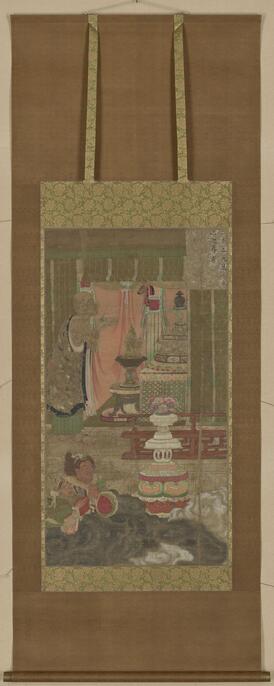
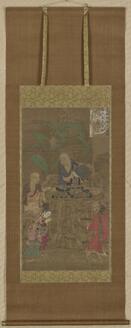
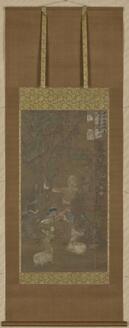
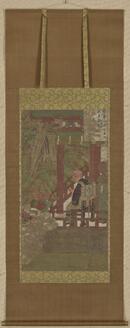
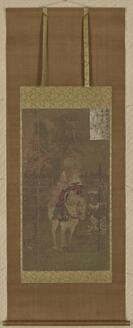
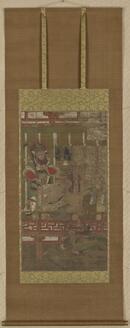
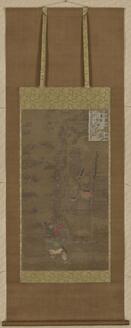
In Buddhism, Arhats are sages who have completed their ascetic training. The Sixteen Arhats are a special group who were charged with remaining in this world after the Buddha Sakyumuni's death in order to protect and promulgate Buddhist teachings. The art displayed here is from a set of 16 hanging scrolls. These scrolls, formerly housed in Shojuraigoji Temple in Otsu, Shiga Prefecture, are the oldest extant set of the Sixteen Arhats. They are modelled on earlier Arhat depictions from Tang dynasty China. The Arhats and other figures are depicted with gentle countenances and an array of colors is used to unite each composition. The pictures utilize a technique called urazaishiki, whereby color is applied to the reverse side of the silk screens. When viewed through silk, the pigments appear more subdued and this creates the impression of soft skin, for example. This bright, gentle coloring is a characteristic feature of Japanese Buddhist paintings from the 11th century.
In the upper part of each painting is a rectangular area that notes the name and abode of each arhat. A closer examination reveals a number of birds and flowers. These provide a glimpse into the refined tastes of the Heian nobility. Created over 900 years ago, this work belongs to the oldest surviving series of paintings depicting the Sixteen Arhats. According to Buddhist mythology, these holy men attained enlightenment, immortality, and supernatural powers to aid the faithful. They were revered as guardians of the Buddha’s teachings. The upper part of the painting shows the tenth arhat, Venerable Handaka of the Thirty-Three Heavens, presenting an offering at a Buddha Hall. Below him, two attendants clasp their hands in prayer. The swirling clouds at the bottom suggest that this scene is unfolding not in our world but in a mysterious sacred realm.
— Museum description: Tokyo National Museum (CC BY 4.0), via ColBase / Japan Search.