National Treasure

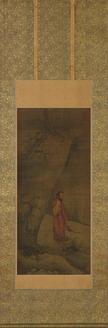
Snowy Landscape
雪景山水図軸
Paintings · Kamakura, 13th centuryTNM
Home › Browse › Paintings › Kamakura period › The Cosmic Buddha of the Golden Wheel
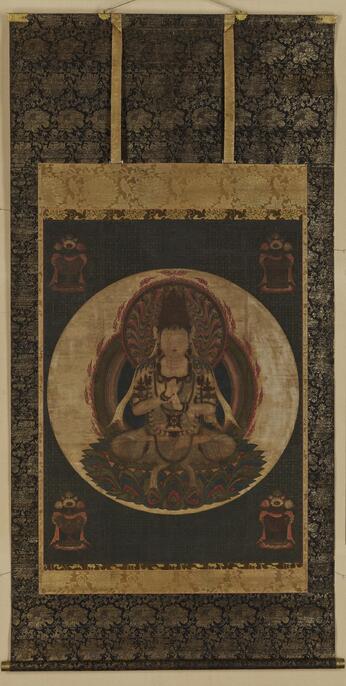
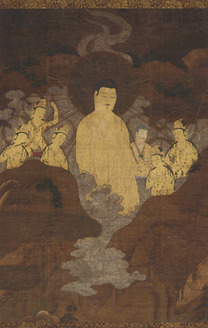
The central figure in Esoteric Buddhism is Dainichi Nyorai, or Mahavairocana in Sanskrit, a deity said to embody the ultimate truth of the universe. Ichiji kinrin, or Ekaksara-usnisacakra, is the supreme manifestation of Dainichi Nyorai. The subject of this painting wears a crown and chest ornament, while his hands are placed in the wisdom-fist mudra. These are all characteristics of Dainichi Nyorai, but the wheel-shaped pendant hanging down over the abdomen reveals this to be portrayal of Ichiji kinrin. When ritual incantations and prayers are performed in Esoteric Buddhism, a deity representing these prayers is hung up in the temple hall. Ichiji kinrin was used when praying for good health and long life. However, the image's powerful potency saw it treated as a hibutsu, or a Buddhist image that could only be used by a few, select people. Though painted in the Kamakura period, this work harmoniously blends features from both the Heian and the Kamakura periods.
The serious countenance and the splashes of red on keynote green and blue hues are characteristic features of Buddhist paintings from the Kamakura period, for instance. Silver powder has been melted and mixed with glue to create silver paint. This has been used to decorate the deity's garments with intricate patterns rendered in soft, delicate lines. The skin also appears soft and well-rounded. This kind of soft, plumpness traces back to Buddhist paintings from the later Heian period. Known as the Cosmic Buddha of the Golden Wheel, this god embodies the powers of all buddhas and bodhisattvas. He emits rings of sacred light and forms a hand gesture representing the union of humans and buddhas. This image was considered so powerful that it was kept hidden in a temple. It was displayed only during secret rituals, during which monks prayed for health and longevity.
— Museum description: Tokyo National Museum (CC BY 4.0), via ColBase / Japan Search.