National Treasure
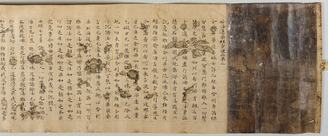
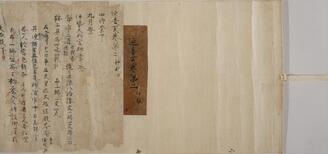
"Expedient Means" Chapter of the "Lotus Sutra" (From Chikubu Island)
法華経 方便品(竹生島経)
Calligraphy & Books · Heian, 11th centuryTNM
Home › Browse › Calligraphy & Books › Heian period › Ten Styles of Japanese Poetry
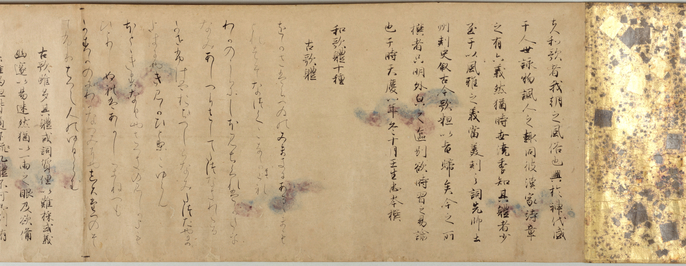
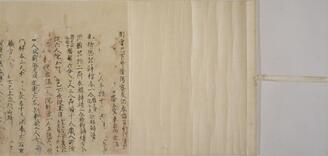
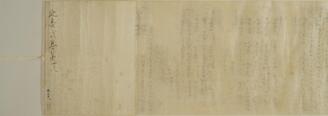
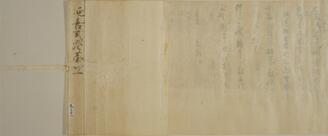
This treatise on waka, or Japanese poetry, is ascribed to Mibu no Tadamine, a representative poet from the Heian Period, which lasted from 794 to 1192. Tadamine was also one of the compilers of the Kokin waka shu, a famous poetry anthology compiled at the behest of the emperor. The treatise discusses waka poems by categorizing them into ten styles in accordance with Chinese poetry conventions. It also contains five example poems for each style and short explanatory comments in Chinese. This work is the oldest extant copy of the treatise. Let's take a look at the paper first. It is decorated with tobikumo, a pattern that resembles flowing indigo and purple clouds. This kind of decorated paper was only produced from the mid-11th century to the start of the 12th century, which suggests the work dates back to the Heian period. At the end of the treatise, the calligrapher is identified as Fujiwara no Tadaie by Kohitsu Ryosa(1572-1662) founded the Kohitsu family, which specialized in the appraisal of ancient writing. There is no conclusive proof that this was indeed written by Fujiwara no Tadaie, but the harmonious blend of elegant Chinese and Japanese characters is beautiful indeed. The exhibit features a handscroll and a hanging scroll.
The segment mounted on the hanging scroll was originally part of the handscroll. The color of the paper has darkened slightly, presumably because it was displayed and appreciated on various occasions in the past. At the imperial court in Kyoto, one’s skill in composing poetry was the definitive measure of character and cultivation. [The Ten Styles of Japanese Poetry] is a treatise on poetic theory written over 1,000 years ago. It categorizes the distinct flavors of Japanese poetry into ten specific types. Each type, bearing names such as the “Archaic Style” and the “Mysterious Style,” is illustrated with five poems. Such treatises served as essential manuals for the art of poetry and were frequently compiled by the era's most prominent poets. [The Ten Styles] was written in 945 by the nobleman Mibu no Tadamine, renowned as one of Japan’s “Thirty-Six Immortal Poets.” The writings on display are from the oldest surviving manuscript copy of [The Ten Styles]. The calligraphy, brushed with great skill, is both rhythmic and fluid. The paper is decorated with a pattern called [tobigumo] (“flying clouds”) in purple and indigo, a distinctive feature of high-quality paper from this period.
— Museum description: Tokyo National Museum (CC BY 4.0), via ColBase / Japan Search.