Important Cultural Property

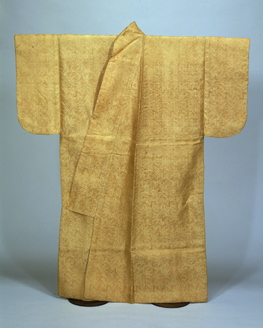
Child's Noh Costume (Surihaku) with Square Papers and Grapes
摺箔(子方) 紫地色紙葡萄模様
Textiles · Muromachi, 16th centuryTNM
Home › Browse › Textiles › Muromachi period › Small Noh Costume (Nuihaku) with Paulownias, Phoenixes, Reeds, Cherry Blossoms, and Snowy Bamboo

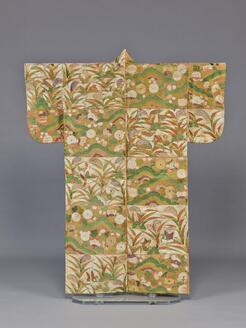
Nuihaku are garments worn by female roles in Noh performances. ‘Nui’ means embroidery, while ‘haku’ refers to the practice of creating designs by pressing gold and silver foil onto fabric. These techniques create patterns that seem to completely fill the decorated sections. With this garment, the arrangement of the designs is worth noting. Only the shoulders and the bottom area are decorated, with the central area left untouched. This style, known as ‘shoulder and bottom design,’ is characteristic of Azuchi-Momoyama-period kosode, or garments with small wrist openings. The second noteworthy point is the difference between the patterns on each side of the garment. Though the design may seem symmetrical at first glance, the motifs on the left and right differ from each other.
This style is called ‘katamigawari’ and it has a prescribed format. The right side, for example, is usually decorated with phoenixes, which are said to be auspicious motifs, and the flowers of a paulownia tree, where phoenixes are said to roost. The left side, meanwhile, is decorated with seasonal plant and flower motifs, such as reeds, cherry blossoms, and snow-covered bamboo. The third thing to pay attention to is the fluffy texture of the silk threads in the embroidered sections. At that time, silk was a luxury product imported from China. The garment makes full use of the material’s soft feel and glossy sheen by raising the threads a little and leaving them slightly loose.
— Museum description: Tokyo National Museum (CC BY 4.0), via ColBase / Japan Search.