Treasures of JapanA catalogue of Japan's designated cultural properties 2,690 works catalogued

Home › Browse › Textiles › Muromachi period › Kosode(Garment with Small Wrist Openings), Design of flowers and birds in tsujigahana dyeing on white plain weave ground with glossed wefts

Important Cultural Property

Kosode(Garment with Small Wrist Openings), Design of flowers and birds in tsujigahana dyeing on white plain weave ground with glossed wefts
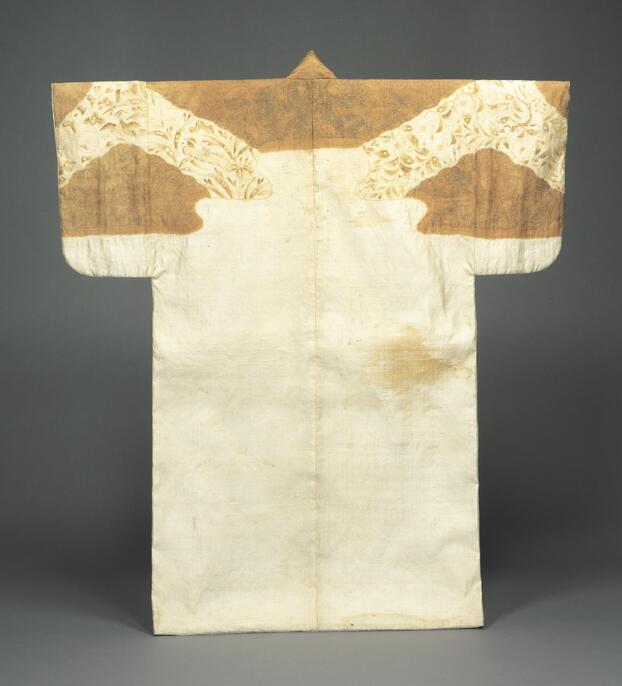
小袖 白練緯地花鳥模様
Kosode(Garment with Small Wrist Openings), Design of flowers and birds in tsujigahana dyeing on white plain weave ground with glossed wefts (小袖 白練緯地花鳥模様)
PLATE IImage: Tokyo National Museum, via ColBase — CC BY 4.0
At a glance — Textile · Muromachi period, 16th century · held by Tokyo National Museum · designated Important Cultural Property of Japan.

Fact Sheet

Designation
Important Cultural Property (重要文化財)
Category
Textiles
Date
1501–1600
Location
Ueno, Tokyo
Catalogue ID
cobas-87481

Find more

Kosode(Garment with Small Wrist Openings), Design of flowers and birds in tsujigahana dyeing on white plain weave ground with glossed wefts is a textile of Muromachi period, 16th century (1501–1600), held by the Tokyo National Museum and designated a Important Cultural Property (重要文化財) of Japan. The facts below are transcribed from the official catalogue record; this entry carries no museum description in English.
Record & Sources

Cite this page: “Kosode(Garment with Small Wrist Openings), Design of flowers and birds in tsujigahana dyeing on white plain weave ground with glossed wefts(小袖 白練緯地花鳥模様).” Treasures of Japan, catalogue no. cobas-87481. Tokyo National Museum. https://treasures.yamato-kenkou.com/treasures/kosode-garment-with-small-wrist-openings-design-of-flowers-and-birds-in-tsujigahana/ — entry last verified 1 November 2026.
Full record data (as published in the official catalogue record)
  • Genre: Textiles
  • Cultural property designation: Important Cultural Property
  • 員数: 1領
  • 分類: 染織

Also at the Tokyo National Museum More →

More textiles of the Muromachi period More →

Advertisement