National Treasure
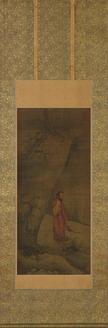
Snowy Landscape
雪景山水図軸
Paintings · Kamakura, 13th centuryTNM
Home › Browse › Paintings › Kamakura period › Lotus Pond and Waterfowl
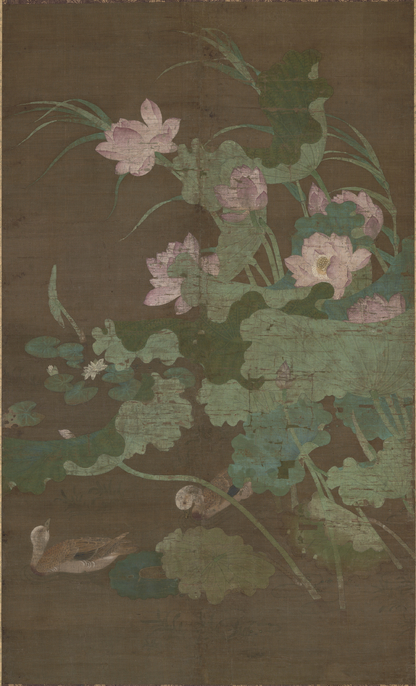
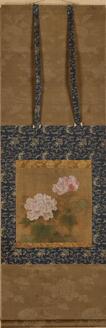
In China, lotus flowers have long been regarded as symbols of love, marriage, and a prosperous line of descendants. They were often depicted alongside mated pairs of waterfowl to represent a happy marriage. Over time, ducks and white herons took on the added meaning of passing the civil service exam and achieving success in life by becoming a high-ranking government official. The practice of combining the auspicious symbols of lotus ponds and waterfowl is thought to have been popularized by 13th-century commercial artists in the Piling area of the Jiangnan district of China. This piece bears the seal of Gu Deqian, a 10th-century artist specializing in birds and flowers, but is believed to have actually been painted in the 13th century by an artist in Piling.
The right-hand side shows lotus flowers in full bloom rustling in the breeze, while the left-hand side shows lotus flowers wilting, motionless as their petals fall. The painting conveys a sense of the passage of time along with the contrasting elements of movement and stillness. The flowing contours of the lotus leaves paired with the rounded shapes of the birds create an engaging composition for the eye. This is combined with bright colors and gently defined details to give the painting an overall sense of pleasant relaxation. Waterfowl in a lotus pond symbolize good harvests, family prosperity, and a successful life. The two paintings capture the lotus flowers budding, blooming, and then shedding, illustrating the entire blooming process.
— Museum description: Tokyo National Museum (CC BY 4.0), via ColBase / Japan Search.