National Treasure

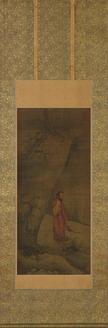
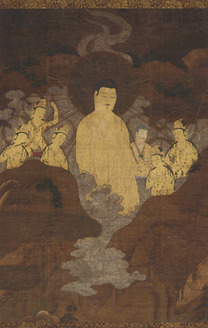
Snowy Landscape
雪景山水図軸
Paintings · Kamakura, 13th centuryTNM
Home › Browse › Paintings › Kamakura period › Illustrated Scroll of The Tale of Sumiyoshi

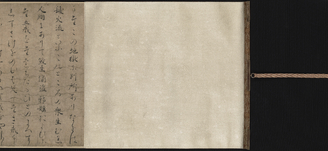
This is the oldest extant illustrated scroll depicting the 'Sumiyoshi Monogatari,' a popular tale during the Kamakura period around the 13th and 14th centuries. The protagonist of the story is a princess living in Kyoto. The princess loses her mother at an early age and is subsequently raised by her stepmother. She grows into a beautiful woman and captures the heart of a young lieutenant general, but the bullying stepmother tricks the lieutenant into marrying her own daughter. The lieutenant still remains in love with the princess, though, so the stepmother plots to have her abducted. As a result, the princess runs away to Sumiyoshi in Osaka. While pining for the princess, the lieutenant visits Hasedera Temple, and there he dreams about the Bodhisattva Kannon, who tells the lieutenant he will find his love if he travels to Sumiyoshi. He travels to Sumiyoshi, where he follows the beautiful sound of a zither and finally finds the princess.
In this way, the pair are reunited and they return to Kyoto to live happily together. The overbearing stepmother, meanwhile, is cast aside by her husband, a state councillor, after he learns of her misdeeds. This is indeed a tale with a happy ending. The volume owned by the Tokyo National Museum depicts part of the latter half of the story. It features a scene of the lieutenant travelling to Sumiyoshi to find the princess; a scene of the couple being reunited at the house where she was taking refuge; and a scene showing a party celebrating their marriage. The man dressed in white is the lieutenant. As you view the scenes, try to imagine the nervous excitement of the lieutenant as he draws closer to his princess. A characteristic feature of narrative picture scrolls is the way they carefully depict each scene according to the flow of the tale. This makes them easy to understand and enjoy even for us modern-day viewers.
— Museum description: Tokyo National Museum (CC BY 4.0), via ColBase / Japan Search.