National Treasure

Sūtra box with design of lotus flowers
蓮唐草蒔絵経箱
Crafts · Heian, 12th centuryNara NM
Home › Browse › Crafts › Heian period › Gilt-bronze Bell with Sacred Gem, Gilt-bronze Single Pronged Vajra Bell and Gilt-bronze Three-pronged Vajra Bell (three of a set of five)
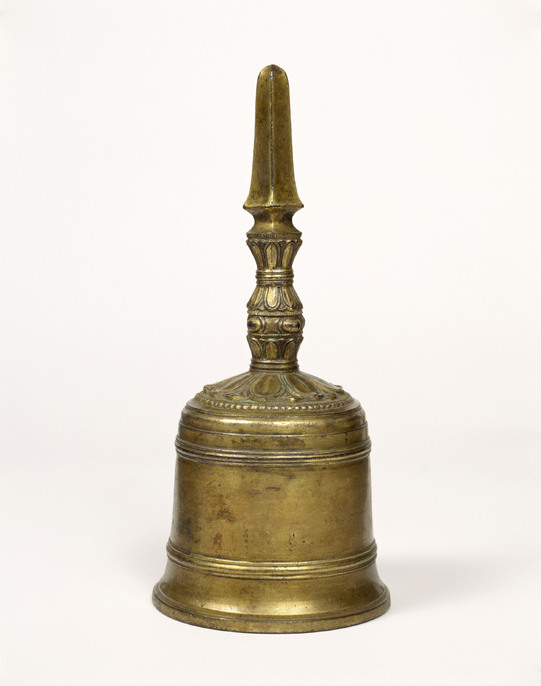
{i=>[mikkyō, vajra, vajra, vajra, cintāmaṇi, hōju], content=>[These are the surviving three from a set of five ritual bells. In esoteric Buddhism (, ), the bells in a complete set have upper portions with a single-pronged , pestle, a three-pronged , pestle, a five-pronged , pestle, sacred jewels (Skt. , ; J. , ), and a pagoda. These symbolize the five buddhas (Skt. Pañcatathāgata) of primary importance in the esoteric pantheon, with Dainichi (Skt. Vairocana) at the center.]} {i=>[vajra, vajra, vajra], content=>[These three bells were originally part of a set of five ritual bells, which included a single-pronged , bell, a three-pronged , bell, a five-pronged , bell, a bell with a stupa, and a bell with sacred jewels. The five bells symbolize the Five Wisdom Buddhas (Skt. Pañcatathāgata) of the Diamond World (Skt. Vajradhātu), one of which is the buddha Dainichi (Skt. Mahāvairocana). During esoteric rituals, the bell with a stupa is placed in the center of a large platform and the remaining four bells are placed in the middle of each of the four sides.
As these three bells were produced as part of the same set, their bodies and handles were made to the same specifications. The body of each gradually grows wider toward the base, and the bottom edge flares outward. The bodies feature little adornment, with only sets of raised lines on the upper and lower parts. The middles of the handles have “demon eyes”—oval motifs with a second oval inscribed inside—rendered in relief. Lotus petals are depicted above and below them. The petals have engraved outlines and are bound in the middle with three raised bands. The demon eyes and use of three raised bands are common in works from the late Heian period (794–1185), but the engraved outlines on the petals and shapes of the bells’ bodies seem to date to the Kamakura period (1185–1333). Consequently, the original set is thought to have been produced between the late Heian period and the early Kamakura period. The sacred jewels attached to the handle of one of the bells used to have flames around them, but this element has been lost. ]}
— Museum description: Nara National Museum (CC BY 4.0), via ColBase / Japan Search.